

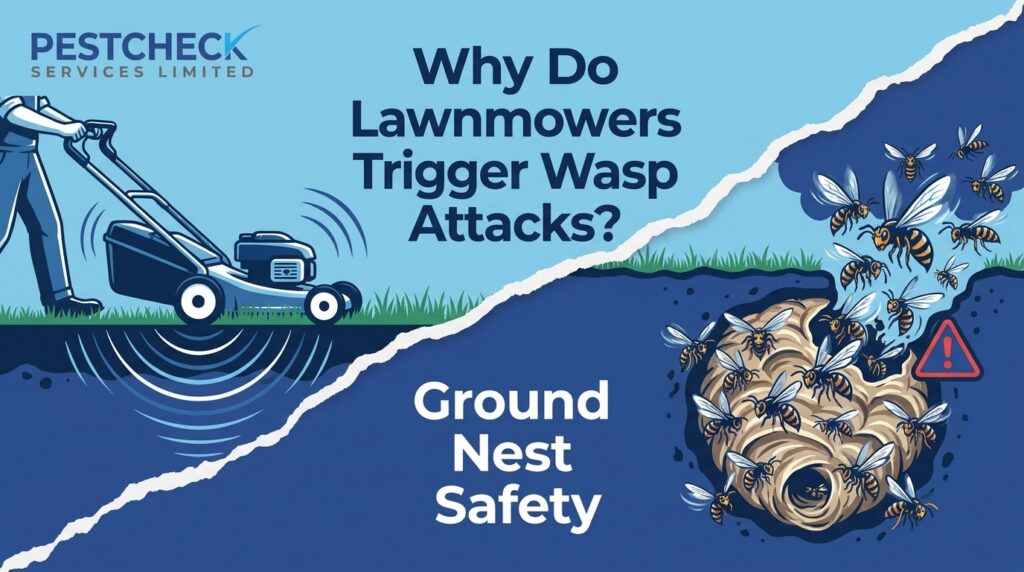
The low rumble of a lawnmower is not just background noise to a ground-nesting wasp. It is a powerful trigger that can turn a routine mow into a dangerous attack. The vibration travels through the soil and into the nest, while the engine noise mimics the sound of a large predator. Together, they signal an immediate threat, and the colony responds with overwhelming force.
We see this pattern repeatedly during the growing season: a homeowner pushes a mower over a hidden nest, and within seconds, dozens of wasps pour out in defense. The attack is not random—it is driven by two specific cues from your equipment. Knowing why lawnmowers trigger wasp attacks is the first step to navigating ground nests safely during yard work.
Why Do Lawnmowers Trigger Wasp Attacks? Understanding Defensive Behavior
Ground-nesting wasps, particularly yellow jackets, are highly defensive of their colonies. Unlike aerial nests that hang visibly from eaves or branches, ground nests are hidden in abandoned rodent burrows, cavities under roots, or gaps in the soil. This concealment means a mower can roll directly over the entrance without the operator ever seeing it.
The role of noise and vibration in disturbing ground nests
A gasoline-powered lawnmower produces both low-frequency vibration and sustained loud noise. The vibration travels through the ground and shakes the nest structure, while the noise is registered by the wasps as a large animal digging at the entrance. Both signals bypass the normal visual warning of an approaching predator and trigger an instant defensive response.
When a nest is disturbed in this way, the wasps do not wait to see what the threat is. They launch directly toward the source of the disturbance—the mower and the person holding it. This is why attacks often seem to come from nowhere: the nest was never visible to begin with.
How wasps communicate danger through pheromones and swarm
When the first wasps sting or are crushed, they release an alarm pheromone. This chemical signal marks the perceived attacker and recruits the rest of the colony to join the defense. Within seconds, what began as one or two wasps becomes a coordinated swarm. Each wasp can sting repeatedly, and the pheromone keeps the attack focused on the moving source of vibration.
This pheromone-based communication is why retreating to the house does not always stop the attack immediately; the chemical marker can linger on clothing and equipment, and wasps may follow the scent. We recommend leaving the area quickly but calmly, and avoiding swatting, which can crush more wasps and release more pheromone.
Identifying Ground-Nesting Wasps and Locating Their Nests Before You Mow
The most effective way to avoid a lawnmower-triggered wasp attack is to find the nest before you start the engine. A five-minute walk of the yard can reveal hidden activity that would otherwise go unnoticed until it is too late.
Common ground-nesting wasp species and their characteristics
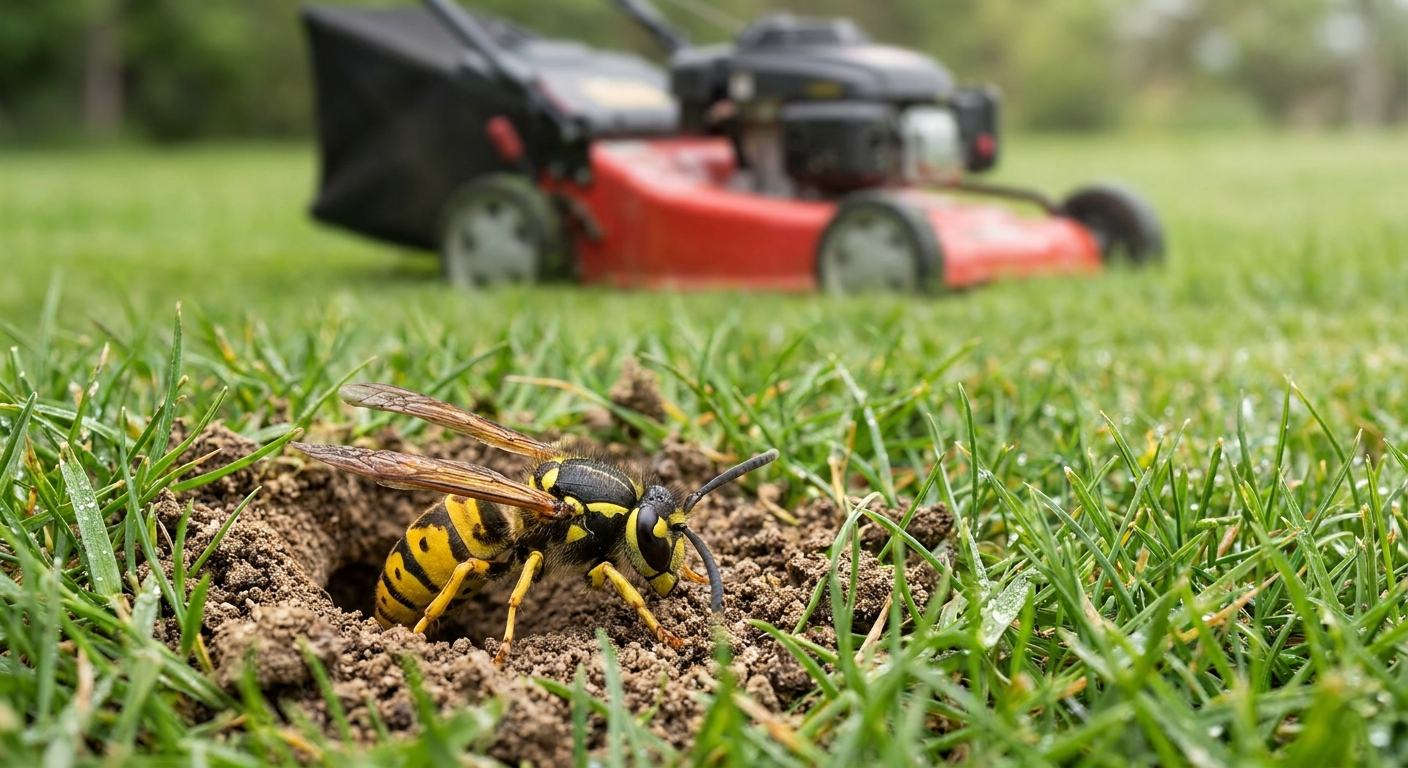
In most regions, the primary ground-nesting threat is the yellow jacket. These wasps are about half an inch long, with black and yellow banding. They build nests underground, often in old rodent burrows or under landscape timbers. Unlike bees, they do not lose their stinger and can sting multiple times. Other ground-nesting wasps, such as cicada killers, are larger but far less aggressive and rarely sting unless handled.
We also see paper wasps occasionally nesting in ground-level voids, but their open-comb nests are usually visible. For lawn mowing safety, yellow jackets are the species to watch for.
Signs of an active ground nest: flight patterns, holes, and activity
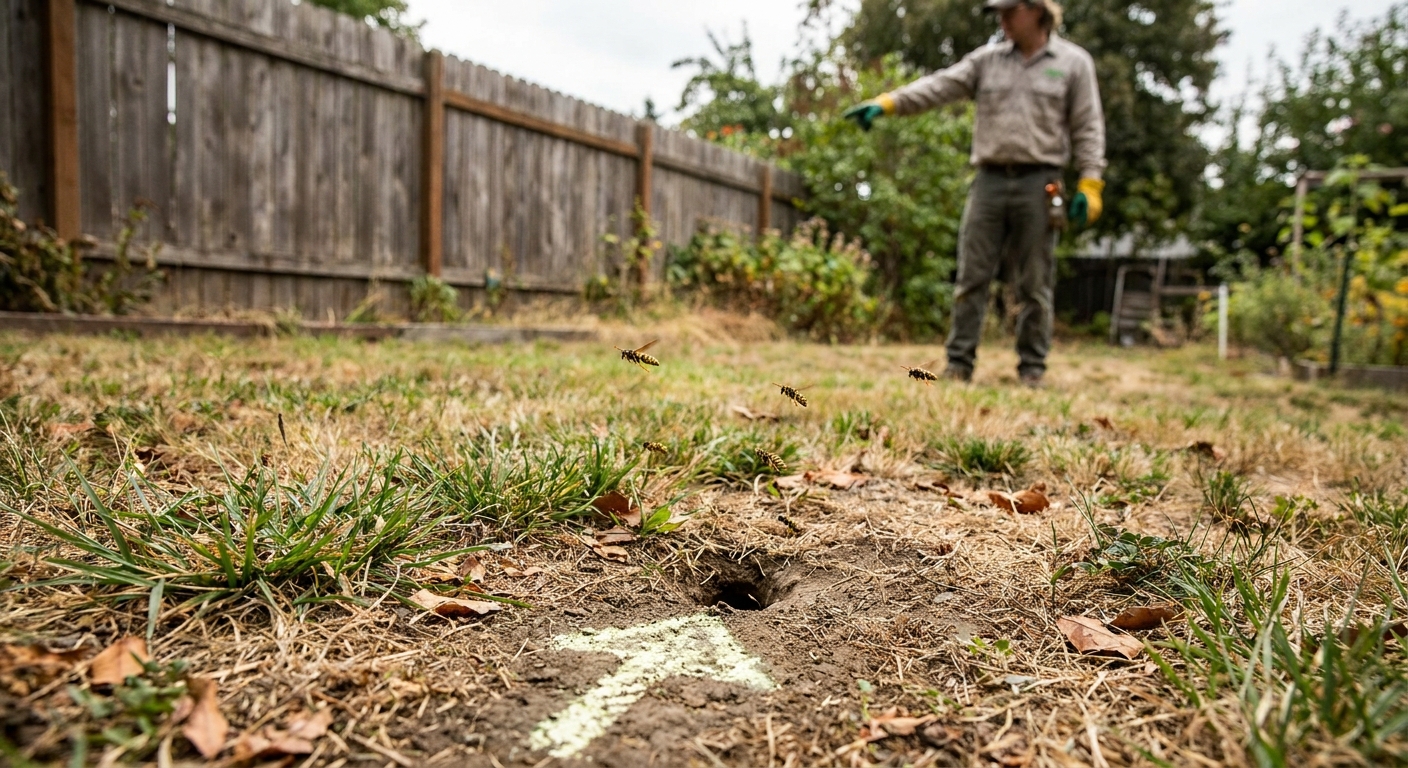
Look for wasps flying low and fast in a straight line just above the grass—that flight path often leads directly to a nest entrance. Check for small holes in the soil, often with bare dirt or a small mound around the opening. On warm afternoons, you may see several wasps entering and leaving the same hole within a minute. Listen for a faint buzzing near the ground when you pause the mower. If you see a concentration of wasps hovering over one spot, do not approach; that is likely a nest entrance.
Safe Mowing Strategies to Minimize Wasp Encounters
If you know a nest is present, or if you are mowing in an area where ground nests are common, a few adjustments can significantly reduce your risk. The goal is to avoid sending strong vibration and noise directly into a nest, and to give yourself time to react if wasps do appear.
Choosing the right time of day to mow when wasps are less active
Wasps are cold-blooded and less active during cooler temperatures. Early morning, before the sun has warmed the ground, is often the safest window because many workers are still inside the nest and slow to respond. Late evening after sunset also works, but mowing in low light brings its own hazards. Avoid the warm midday and afternoon hours, when wasps are most active and most likely to be out foraging.
We recommend checking a three-day forecast and scheduling mowing for a cool, dry morning when the grass is not wet. Wet grass clumps and requires more passes, which increases vibration exposure near hidden nests.
Mowing techniques around known nests: maintaining distance and staying alert
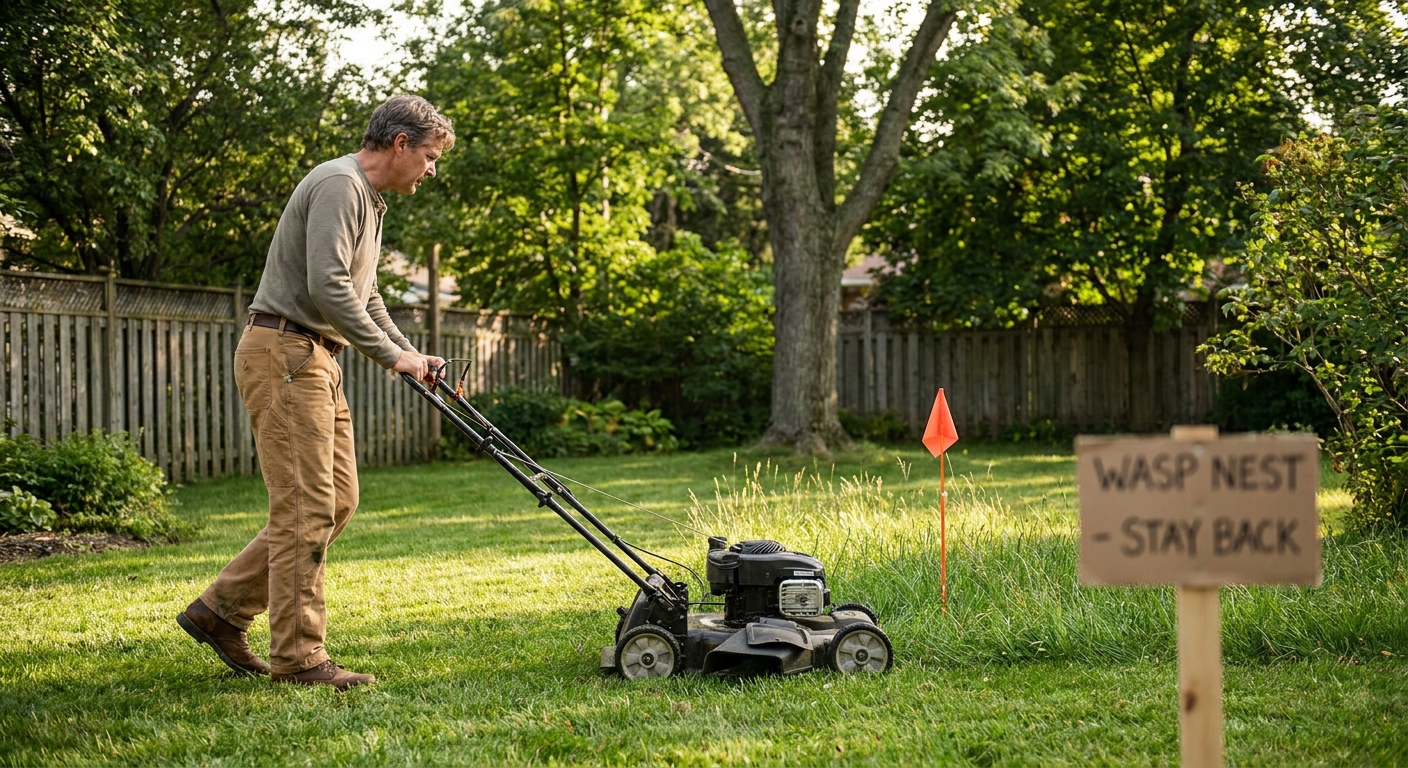
If you have located a nest, do not mow within 20 feet of the entrance unless you have taken professional precautions. Mark the area with a flag or stake so you remember where it is during each pass. Keep the mower moving in straight lines away from the nest, and never turn the mower directly on top of the suspected area. Watch for wasps appearing mid-lawn; if they start emerging, stop the mower, release the blade, and back away slowly without turning your back on the nest.
With over 20 years of experience, we have seen that most lawnmower-related wasp incidents occur when an operator either fails to spot a nest or ignores the early warning signs of a few scout wasps. Paying attention to those first few wasps is your best early-warning system.
Immediate Steps If You Disturb a Wasp Nest While Mowing
Even with precautions, accidents happen. If you mow over a ground nest and wasps begin swarming, your actions in the first few seconds matter most.
How to react calmly and move away without provoking further attacks
Do not swat, scream, or run in circles. Swatting crushes wasps and releases more alarm pheromone, while sudden movements can trigger chase behavior. Instead, release the mower blade, leave the mower where it is if you can, and walk briskly but smoothly away from the nest in a straight line. Get indoors or into a vehicle if possible. Once inside, stay there for several minutes—wasps will often wait near the nest entrance and the mower for the perceived threat to return.
If you must move past the nest to reach safety, keep your face and eyes protected as much as possible and continue moving. Do not jump into a pool; wasps will wait at the surface.
First aid basics for wasp stings and when to seek medical help
Most wasp stings cause localized pain, swelling, and redness that improves within a few hours. Wash the area with soap and water, apply a cold pack to reduce swelling, and consider an over-the-counter antihistamine or pain reliever. Watch for signs of a severe allergic reaction: difficulty breathing, swelling of the face or throat, dizziness, rapid heartbeat, or a sudden drop in blood pressure. If any of these occur, call emergency services immediately—do not wait to see if symptoms improve.
Multiple stings, even without an allergy, can be dangerous due to the volume of venom. If you receive more than a dozen stings, seek medical evaluation even if you feel fine.

Long-Term Prevention: Landscaping to Discourage Ground Nesting Wasps
Ground-nesting wasps choose sites that offer shelter, easy digging, and minimal disruption. By changing a few features of your yard, you can make it far less attractive to a founding queen in spring.
Yard maintenance practices that make your lawn less attractive to wasps
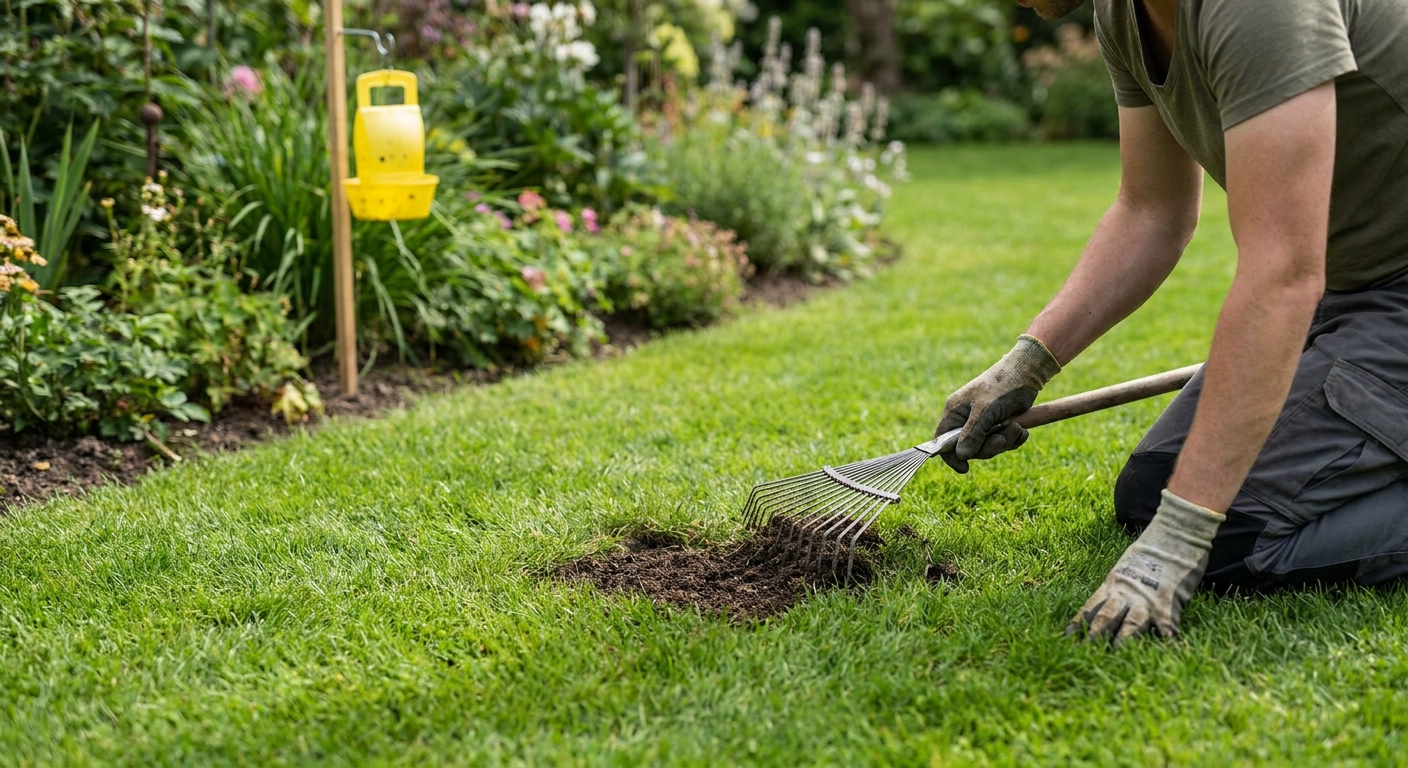
Fill in old rodent burrows and depressions as soon as they appear. Keep the lawn mowed regularly so the grass does not provide cover for nest entrances. Remove leaf litter, brush piles, and fallen logs that can harbor insects that wasps prey on. Ensure garbage bins have tight-fitting lids and are kept away from the house. Fix leaky outdoor faucets and eliminate standing water, as wasps seek water sources near nesting sites. In early spring, before queens establish nests, walk the property weekly and disturb any small holes you find—simply raking the soil can discourage a queen from settling in that spot.
Monitoring and early detection to avoid large nest establishments
A ground nest grows rapidly from a single queen in spring to thousands of workers by late summer. The earlier you detect activity, the easier it is to manage safely. Set a reminder to inspect your yard every one to two weeks during the warm season. Look at the same spots each time: along fence lines, under shrubs, near garden beds, and anywhere the soil is soft. If you notice an increase in wasp traffic around a particular hole, mark it and keep children and pets away.
We recommend photographing or noting the location and monitoring it for a few days before deciding on next steps. Sometimes solitary wasps use a hole briefly and then abandon it; other times it is the start of a large colony.
If you find an active ground nest on your property, especially one near a mowing path, contact a professional pest control service for safe removal.