

Most store-bought wasp traps are built around a simple idea: lure foraging wasps into a container they cannot escape. That approach can catch dozens of insects in a weekend, but it often leaves the actual colony untouched. In fact, if you are already dealing with wasps on your property, Are Store-Bought Wasp Traps Making Your Infestation Worse? is a question worth asking before you hang another trap.
We see this pattern regularly. A homeowner sets a trap near a deck or patio, then notices more wasps in the yard than before. That is not a coincidence. The bait plumes used by many commercial traps are designed to pull wasps in from surprising distances, including from neighbouring properties. Catching a few workers may feel like progress, but without addressing the nest itself, you can end up with a larger visible problem.
How Store-Bought Wasp Traps Work
Common Types of Wasp Traps
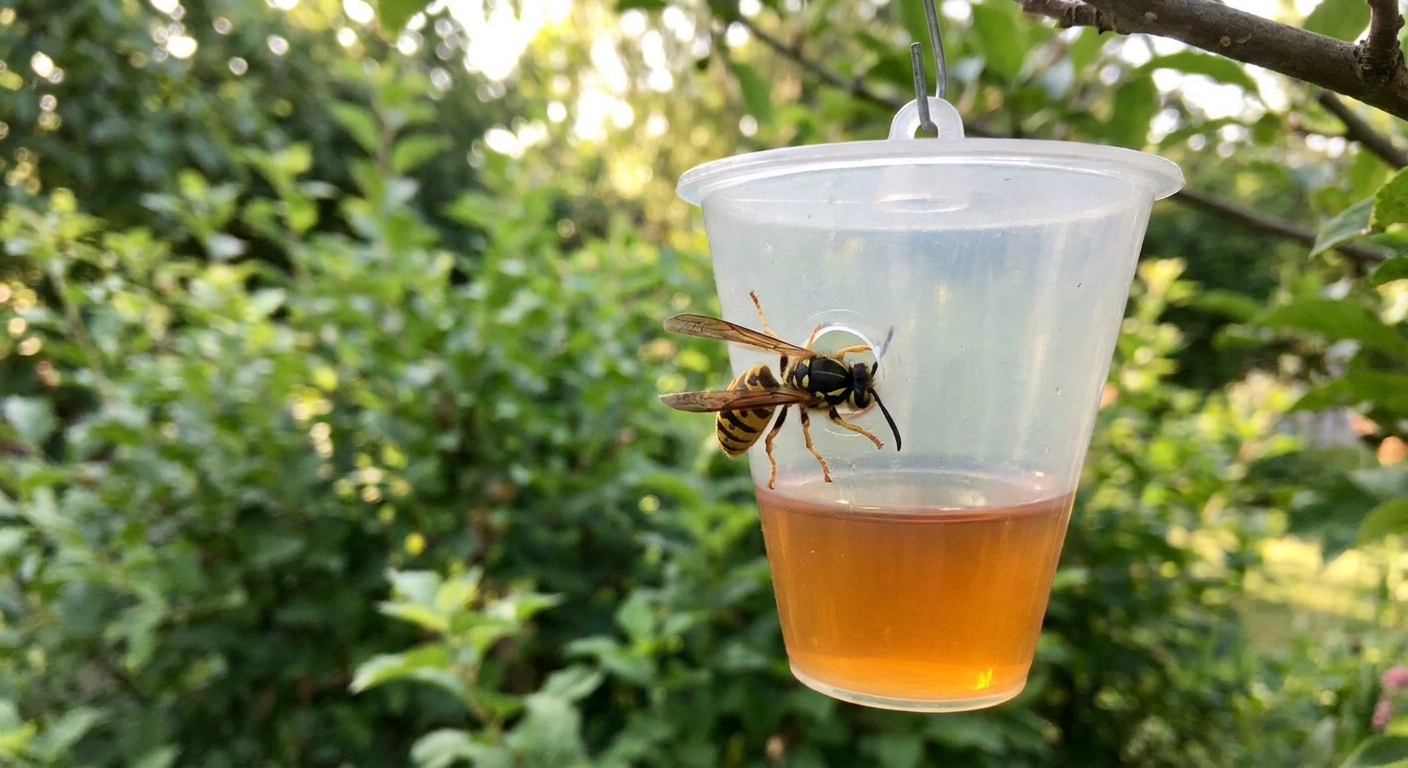
Most commercial traps fall into a few designs: hanging bag traps with a liquid attractant, reusable plastic traps with one-way funnel entrances, and sticky traps that use an adhesive surface. Reusable traps often have a chamber for liquid bait or a solid lure that releases scent over several weeks. Disposable traps are pre-baited and sealed until you activate them by adding water. The common thread is an enclosed capture area with an entry designed to be easier for a wasp to find than to leave.
Lure and Capture Mechanism
These traps rely on a food or chemical lure. For yellowjackets, protein baits or sweet, fermenting liquids work well; wasps are drawn to the scent, crawl or fly in through the opening, and then have trouble locating the exit. Inside, they may drown in liquid or dehydrate. The trap can hold dozens or even hundreds of insects before it needs emptying, but that capture is limited to foragers—wasps that left the nest to search for food. The reproductive core stays safe.
The Attraction Problem: Why Store-Bought Wasp Traps Can Draw More Wasps to Your Property
Scent Plumes and Long-Range Attraction
Yellowjackets and some other wasps can forage up to a mile from their nest. That means a trap placed near your patio can pull wasps from neighbouring yards, parks, or wooded areas well beyond your property line. The bait plume spreads downwind and creates a scent trail that wasps follow to the source. In practice, you may catch wasps that would never have visited your yard otherwise, replacing a small local population with a steady stream of new arrivals.
Increased Forager Traffic Around the Trap
When a trap is actively releasing attractant, the area around it can become a flight path for incoming wasps. That often leads to more wasps visible near the trap and along the route to it. If the trap is hung near a deck, door, or play area, the traffic pattern can make those spaces feel less safe. We have seen cases where a poorly placed trap turned a quiet corner of a yard into the busiest wasp corridor on the property.
Why Traps Can’t Eliminate the Colony: Are Store-Bought Wasp Traps Making Your Infestation Worse?
Worker Wasps vs. Reproductive Members
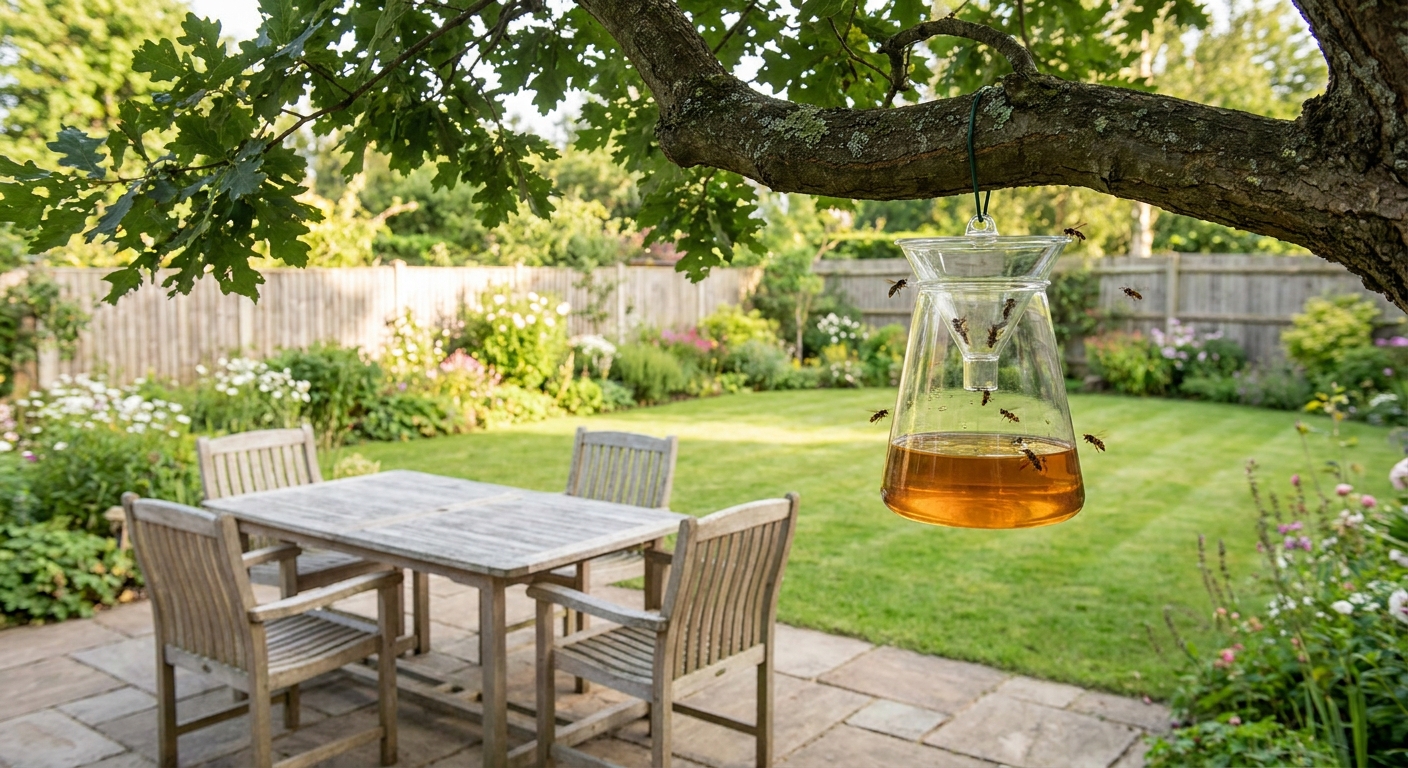
Every wasp you see at a trap is a worker. Workers are sterile females that gather food and build the nest. The queen stays inside and lays eggs; she never forages. Because traps only intercept workers, they cannot reach the queen or the developing brood. A healthy yellowjacket colony can contain thousands of workers, so removing even several hundred from traps is a small fraction of the nest’s workforce.
Colony Growth Continues Despite Worker Loss
The queen can replace lost foragers quickly during the active season. In late summer, colony numbers peak and aggressive behaviour increases as food becomes scarce. If you are trapping 50 or 100 wasps per week, the nest may simply produce that many replacements. This is why we see homeowners who have been diligently emptying traps all season yet still face a large, active colony when they finally locate the nest.
Maintenance Challenges with Store-Bought Wasp Traps
Overflowing Traps and Repellent Effects
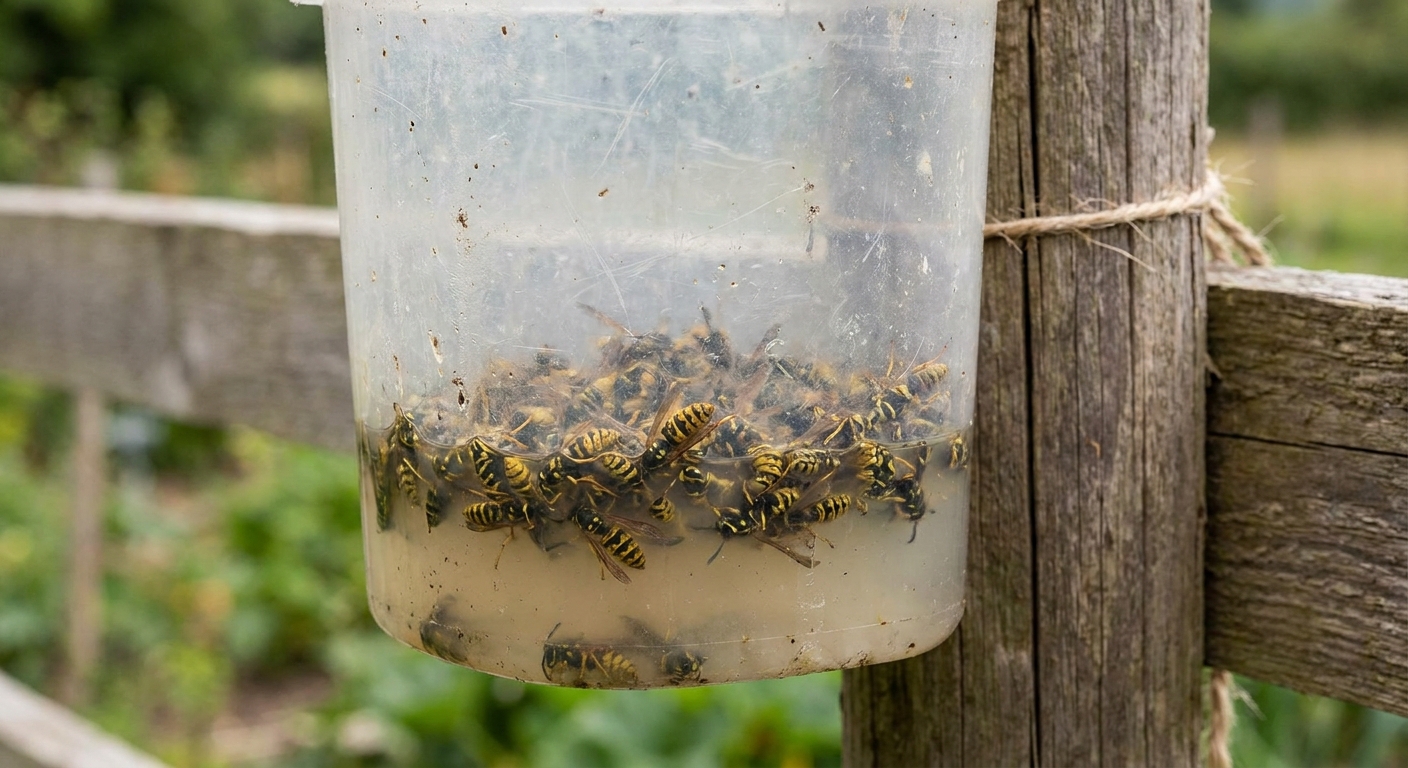
A trap that is not emptied regularly becomes packed with dead wasps. That buildup does two things: it reduces the available space for new captures, and it can actually repel wasps because the scent of decay overpowers the bait. Some traps also leak or spill, creating a mess that attracts other pests. A full trap may still smell attractive from a distance but stop catching effectively up close, giving you the worst of both results.
Frequent Cleaning and Bait Replacement Requirements
Liquid baits evaporate or become diluted by rain, and solid lures lose strength over time. To keep a trap working as intended, you need to clean it, replace the bait, and dispose of dead insects on a schedule that many people skip. Between hot weather and heavy wasp activity, the maintenance can become a weekly chore. Skipped maintenance means the trap becomes less a control tool and more a source of odour and insect debris.
Proper Placement to Minimize Risk
Distance from High-Traffic Areas
If you do use a trap, place it at least 20 feet away from doorways, patios, decks, play structures, and outdoor eating areas. The goal is to intercept wasps before they reach the places you use. Hang traps near natural areas like trees, shrubs, or fence lines where wasps already travel, not in the middle of the lawn. Also avoid placing a trap directly under eaves or near a visible nest, because that can pull defending workers toward the house.
Strategic Positioning to Redirect Wasps
Use the prevailing wind to your advantage. Position traps downwind of your gathering spaces so the scent plume carries away from people, not toward them. If you have multiple traps, space them apart so they cover different approach routes rather than compete for the same scent plume. And remember: moving a trap even 10 or 15 feet can change the flight pattern through your yard, so monitor for a few days and adjust if you see more wasps near living areas.

When to Seek Professional Wasp Control
Signs of a Large or Persistent Infestation
If you are emptying traps weekly and still seeing steady wasp traffic, the colony is likely large enough that trapping alone will never reduce the risk. Other signs include wasps entering and exiting the same gap in siding, soffits, or the ground, seeing multiple queens in early spring, or hearing a scratching or buzzing sound from inside a wall. Aerial nests under eaves or in trees are easier to spot, but ground nests and voids can house thousands of wasps without being obvious.
Benefits of Professional Assessment and Treatment
A professional inspection identifies the actual nest location, entry points, and species involved — which matters because different wasps require different treatment approaches. We remove the colony rather than just thinning worker numbers, which is the only way to stop the cycle. During our inspection we also look for conditions that attract wasps in the first place, so the fix lasts longer than a trap ever could.
We have been treating wasp infestations for more than 20 years. Every treatment starts with a thorough inspection and includes advice on preventing reinfestation.
Non-Trap Methods to Reduce Wasp Infestations
Prevention Through Habitat Modification
The most effective way to reduce wasp pressure is to remove what attracts them. Keep outdoor trash cans and recycling bins covered with tight-fitting lids, and clean them regularly to remove food residue. Pick up fallen fruit from trees and gardens, because rotting fruit is a major late-summer attractant. Cover food and drinks during outdoor meals, and rinse out soda cans and juice containers before they go into recycling. Small steps like these make your property less inviting to foraging wasps.
Professional Exclusion and Treatment Options
Beyond habitat changes, sealing gaps in siding, soffits, fascia, and around utility lines prevents wasps from building nests inside your walls. Installing fine mesh over vents and repairing torn window screens also blocks entry. If wasps are already nesting in a void or cavity, removal should be left to a professional who can access the nest safely and treat the void so the colony does not rebuild in the same spot. We combine these exclusion steps with targeted treatment so the source of the problem is gone, not just the foragers around your barbecue.
If store-bought wasp traps are not solving your wasp problem, contact our team for a professional assessment. We will find the nest and recommend a treatment plan that addresses the whole colony, not just the workers that happen to fly into a plastic bag.