

Spiders are notorious for their ability to infiltrate even the most well-maintained properties. While traditional chemical applications have their place in pest management, they often provide only a temporary fix when used in isolation. Because spiders walk high on the tips of their legs, their bodies rarely make contact with treated surfaces, allowing them to bypass chemical barriers entirely. To achieve true, long-lasting eradication, we must look at Beyond Spraying: How Professionals Find and Block Spider Entry Points. By shifting the focus to structural exclusion, we stop these arachnids before they ever cross your threshold.
As a family-owned and operated pest control company with over twenty years of experience, we have learned that keeping a home completely bug-free requires a comprehensive approach. We protect your home like it is our own, which is why our highly trained technicians prioritize finding and sealing the hidden gaps that invite pests inside. Understanding the science of spider behavior and the architecture of residential structures is the key to securing your living spaces for good.
Why Spraying Isn’t Enough: The Shift to Spider Exclusion
The Limitations of Chemical-Only Treatments
Relying exclusively on liquid pesticides presents several challenges. Chemical applications naturally degrade over time when exposed to sunlight, moisture, and temperature fluctuations. More importantly, spiders lack the grooming habits of other common pests like ants or roaches. When an insect walks across a treated surface, it later cleans its antennae and legs, ingesting the active ingredients. Spiders do not groom themselves in this manner, and their unique physiology keeps their abdomens elevated above the ground. This means they can often walk right over a treated perimeter without absorbing enough of the product to be deterred.
Why Physical Barriers Provide Long-Term Relief
Physical exclusion forms the foundation of a permanent pest management strategy. By physically blocking the routes spiders use to enter a structure, we eliminate the reliance on repeated chemical applications. This approach not only provides a more durable defense but also aligns with our commitment to environmental stewardship. Utilizing physical barriers reduces the overall volume of pest control products needed over time, offering a safer environment for families and pets while ensuring that the interior of the home remains completely secure.
Common Spider Entry Points in Homes
Foundation Cracks and Weep Holes
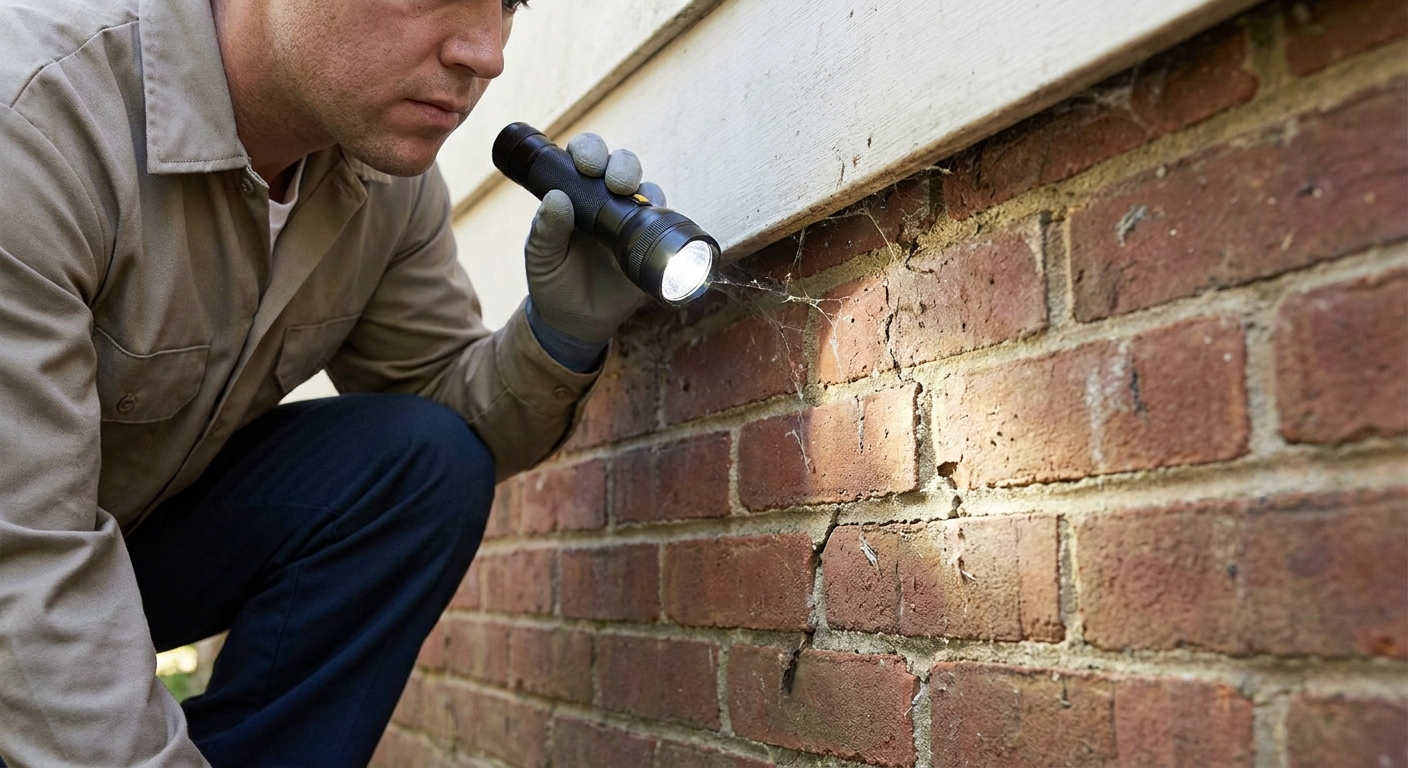
The base of a home is the first line of defense against crawling pests, but it is also one of the most vulnerable. Over time, settling foundations develop hairline cracks that serve as highways for spiders seeking shelter. Weep holes, which are intentionally built into masonry to allow moisture to escape, are another common entry point. While these openings are necessary for the structural health of a building, they provide unrestricted access for arachnids if left unprotected.
Vulnerabilities Around Windows and Doors
Windows and doors are primary transition zones where the exterior environment meets the interior. Worn weatherstripping, degraded door sweeps, and gaps around window frames are prime real estate for spiders. These predators often build webs near exterior lights by doorways to catch flying insects, and when the temperature drops, they simply slip through the nearby gaps to move indoors.
Unsecured Vents and Utility Penetrations
Modern homes are pierced by numerous utility lines, including plumbing pipes, electrical conduits, and HVAC systems. The spaces where these utilities enter the home are rarely sealed perfectly during construction. Additionally, crawlspace and attic vents with damaged or missing screens offer an open invitation to spiders, allowing them to bypass the living areas and establish breeding populations in undisturbed spaces.
Professional Inspection Techniques: How Experts Find Hidden Gaps
Conducting Systematic Exterior Audits
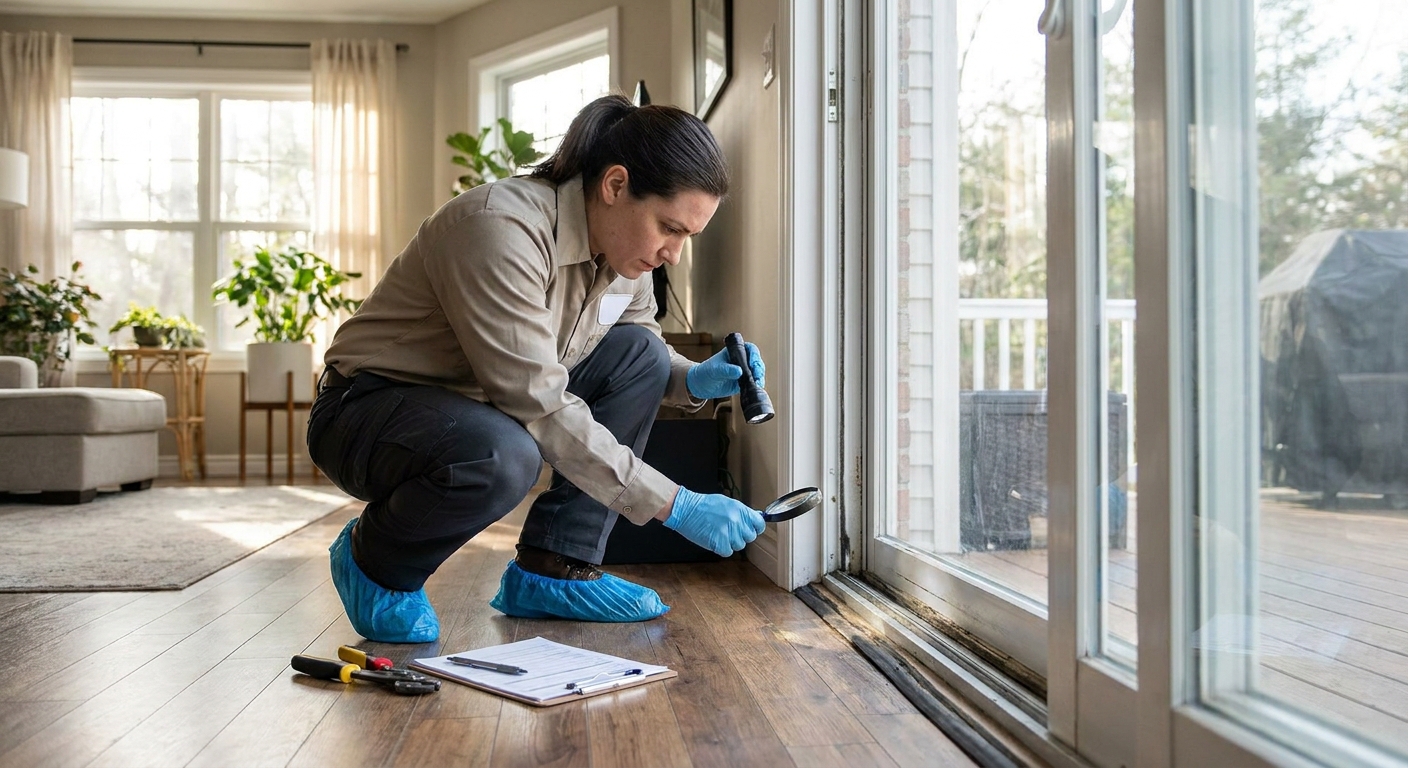
Finding every potential entry point requires a trained eye and a methodical approach. Our proven pest control process ensures a comprehensive evaluation:
- Contact Us: Our friendly dispatch manager, Julie Scott, answers your questions and books your appointment.
- Inspection: We evaluate the perimeter from the roofline down to the soil.
- Diagnosis: We map out structural weaknesses and create a customized plan.
- Treatment: We apply professional exclusion methods to secure the property.
Stephen Scott, our owner and head technician who has been working in the industry since 2000, ensures that our team approaches every property systematically to create a highly effective diagnosis.
Using Advanced Diagnostic Tools
Professional exterminators do not rely on visual inspections alone. Our fully licensed and background-checked technicians utilize high-lumen tactical flashlights, telescoping mirrors, and moisture meters to investigate dark, inaccessible areas. By identifying air drafts and moisture gradients, we can pinpoint exactly where conditioned indoor air is escaping, which often leads us directly to the hidden gaps that spiders use to navigate into the home.
Identifying Micro-Crevices Often Overlooked
Spiders can compress their bodies to squeeze through astonishingly small openings. Our technicians are trained to look for micro-crevices that the average homeowner might dismiss. This includes checking behind exterior siding, examining the mortar joints between bricks, and inspecting the flashing around chimneys. With a 98% treatment success rate across more than 1,500 happy clients, our attention to these microscopic details is what sets our exclusion services apart.
Advanced Exclusion Methods for Blocking Spiders
Applying Professional-Grade Sealants
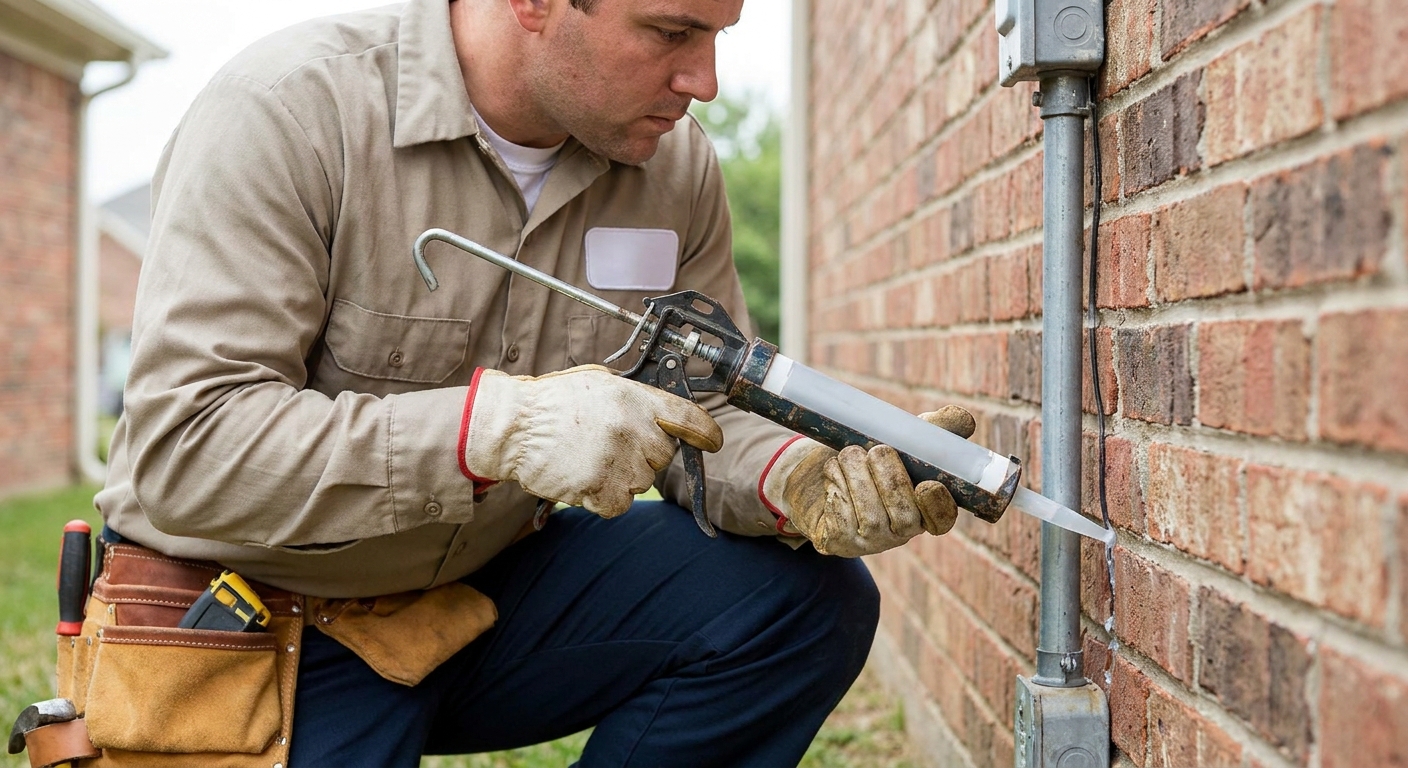
Once the entry points are identified, we move to the treatment and exclusion phase. We utilize professional-grade, weather-resistant sealants that expand and contract with the home’s natural movements. Unlike standard caulks that crack and peel after a single season, our specialized polyurethanes and silicones create a permanent, flexible bond. This ensures that the gaps around utility penetrations and window frames remain impenetrable to spiders year after year.
Installing High-Quality Vent Screens and Meshes
To secure weep holes, crawlspaces, and attic vents without compromising the building’s airflow, we install high-quality, corrosion-resistant meshes. These tight-woven screens are specifically designed to block spiders and other pests while allowing moisture to escape. By upgrading standard builder-grade vent covers to professional exclusion screens, we cut off one of the most common superhighways into the home.
Implementing Structural Modifications for Lasting Defense
In some cases, effective exclusion requires minor structural modifications. This might involve installing heavy-duty door sweeps, adjusting threshold plates, or repairing damaged soffits. As a QualityPro Certified company and proud members of the National Pest Management Association (NPMA), we adhere to the highest industry standards. We ensure that every modification not only fortifies the home against pests but also maintains the aesthetic integrity of the property.
The Role of Integrated Pest Management (IPM) in Spider Control
Combining Exclusion with Environmental Modifications
Exclusion is most effective when paired with environmental modifications as part of an Integrated Pest Management (IPM) strategy. Spiders are attracted to areas with heavy vegetation, accumulated debris, and excessive moisture. Our technicians work with clients to recommend changes such as trimming shrubs away from the foundation, adjusting exterior lighting to reduce insect attraction, and clearing leaf litter. These proactive steps make the immediate exterior of the home far less hospitable to arachnids.
Reducing Insect Populations to Eliminate Spider Food Sources
Spiders are predatory; they establish webs where food is abundant. By controlling the populations of flies, moths, and other insects around the property, we naturally reduce the spider population. When necessary, we utilize pet-safe and eco-friendly options, such as targeted dusts or gels, to eliminate these food sources. All of the treatments we use are nationally registered and heavily tested, deemed highly safe when applied by our trained professionals. By removing their prey, we force spiders to look elsewhere for sustenance.
Professional Spider Control: Securing Your Home for the Long Term
Beyond Spraying: How Professionals Find and Block Spider Entry Points
Achieving a completely bug-free home requires more than just a surface-level application; it demands a deep understanding of pest biology and building construction. Our team, including dedicated technicians like Tayler, Cruz, and Kleber, is committed to providing peace of mind through exceptional service. We prioritize clear communication, sending an email twenty-four hours prior to your appointment and guaranteeing arrival within a strict thirty-minute window. Furthermore, we always respect your property by wearing PPE, using disposable booties, and removing all dead pests before we leave.
Backed by a 4.9/5 service rating and active memberships in organizations like PWIPM, Women in Pest Control, and ISN, we are so confident in our ability to keep insects and wildlife away that our customer commitment policy is simple: we promise to keep working with our clients until they are completely satisfied. If you are ready to experience the highest standard of pest management, focusing on Beyond Spraying: How Professionals Find and Block Spider Entry Points is the ultimate solution. Trust our family to protect yours, and enjoy the lasting comfort of a truly secure home.