

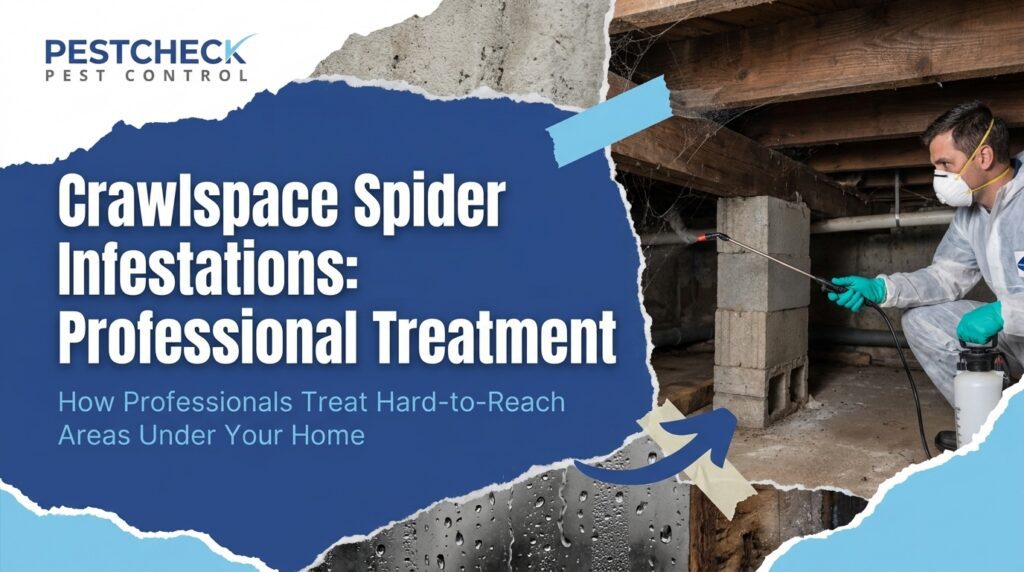
Spiders choose crawl spaces for the same reasons you avoid them: darkness, damp air, and silence. Crawlspace spider infestations: how professionals treat hard-to-reach areas under your home begins with understanding that reducing moisture and sealing entry points is just as important as applying targeted products.
Because these spaces are rarely entered and often used for storage, an undisturbed spider population can grow for months before it becomes obvious. Professional treatment focuses on reaching hidden corners, wall junctions, and subfloor voids where standard surface sprays never penetrate.
Crawlspace Spider Infestations: How Professionals Treat Hard-to-Reach Areas Under Your Home
Treating crawl space spiders is not a one-spray fix. We start with a detailed inspection, then deploy a combination of residual dusts, targeted liquid applications, and monitors placed against foundation walls and floor joists. The goal is to eliminate adult spiders and destroy egg sacs before they hatch, while also reducing the insect prey that draws them in.
Why Crawl Spaces Attract Spiders
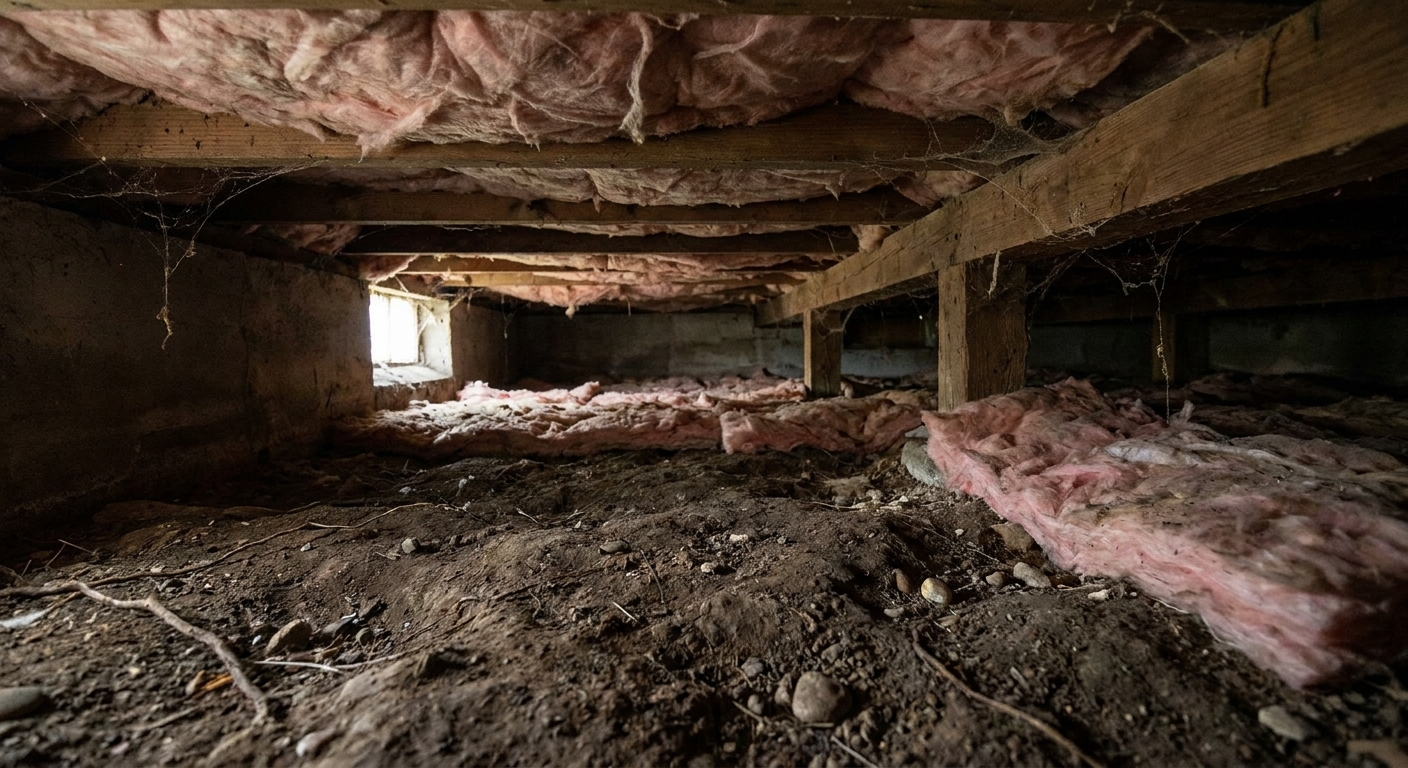
Crawl spaces create a stable microclimate. Exposed dirt floors release moisture, raising relative humidity above 60 percent. Spiders that prefer damp conditions, like long-bodied cellar spiders, thrive in that environment. The space is also dark and rarely disturbed, which allows webs and egg sacs to accumulate without being vacuumed or knocked down. Stored items, especially cardboard boxes and fabric, provide both anchor points and hiding crevices.
The key attractants we look for include:
- Moisture from bare soil or foundation vents
- Insect prey breeding in damp organic debris
- Clutter and stored materials that create web anchor points
- Gaps around plumbing, ducts, and rim joists that let insects and spiders enter
We address these conditions before or alongside chemical treatment; otherwise, new spiders simply recolonize within weeks.
Common Spider Species in Crawl Spaces
The exact species depends on your region, but crawl spaces consistently harbor a few groups. Brown recluse spiders, where present, gravitate to undisturbed storage and seldom-used boxes; they are venomous and require careful handling. Long-bodied cellar spiders build loose, irregular webs in humid corners. House spiders string messy cobwebs along floor joists and subfloor edges. Wolf spiders do not spin webs to catch prey; they move along the ground and may wander up through gaps into living spaces.
- Brown recluse: violin-shaped marking, venomous, reclusive, found in stored items
- Cellar spiders: long legs, irregular webs, prefer high humidity
- House spiders: messy webs in corners and along ceilings
- Wolf spiders: ground hunters, large and fast, no web
Identifying the species matters because it tells us where to place monitors and which products will reach the spiders where they rest.
Signs of a Crawl Space Spider Infestation
Because you may not enter the crawl space often, you need to know what to look for from the access point or during a professional inspection.
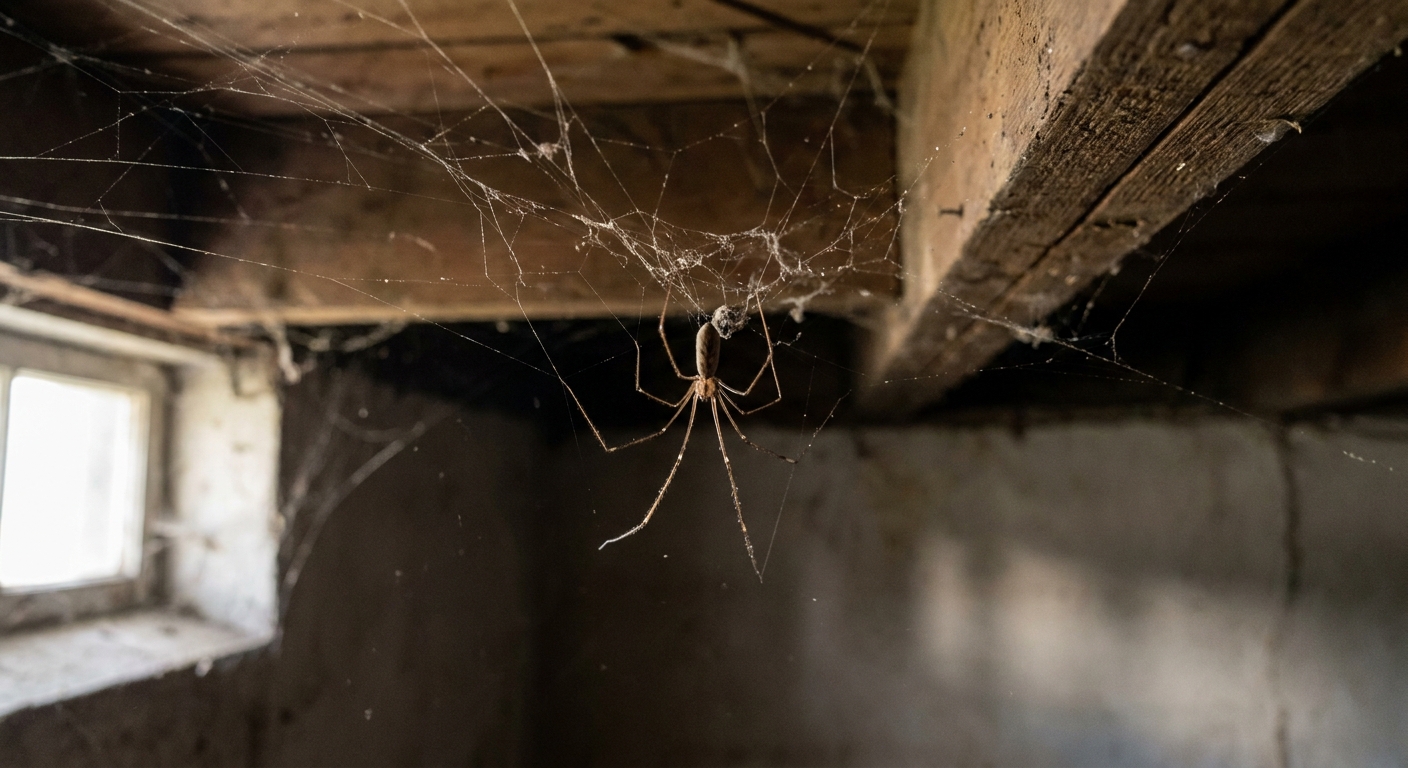
- Webs: orb-shaped, funnel-shaped, or messy sheets; active webs are sticky and free of dust
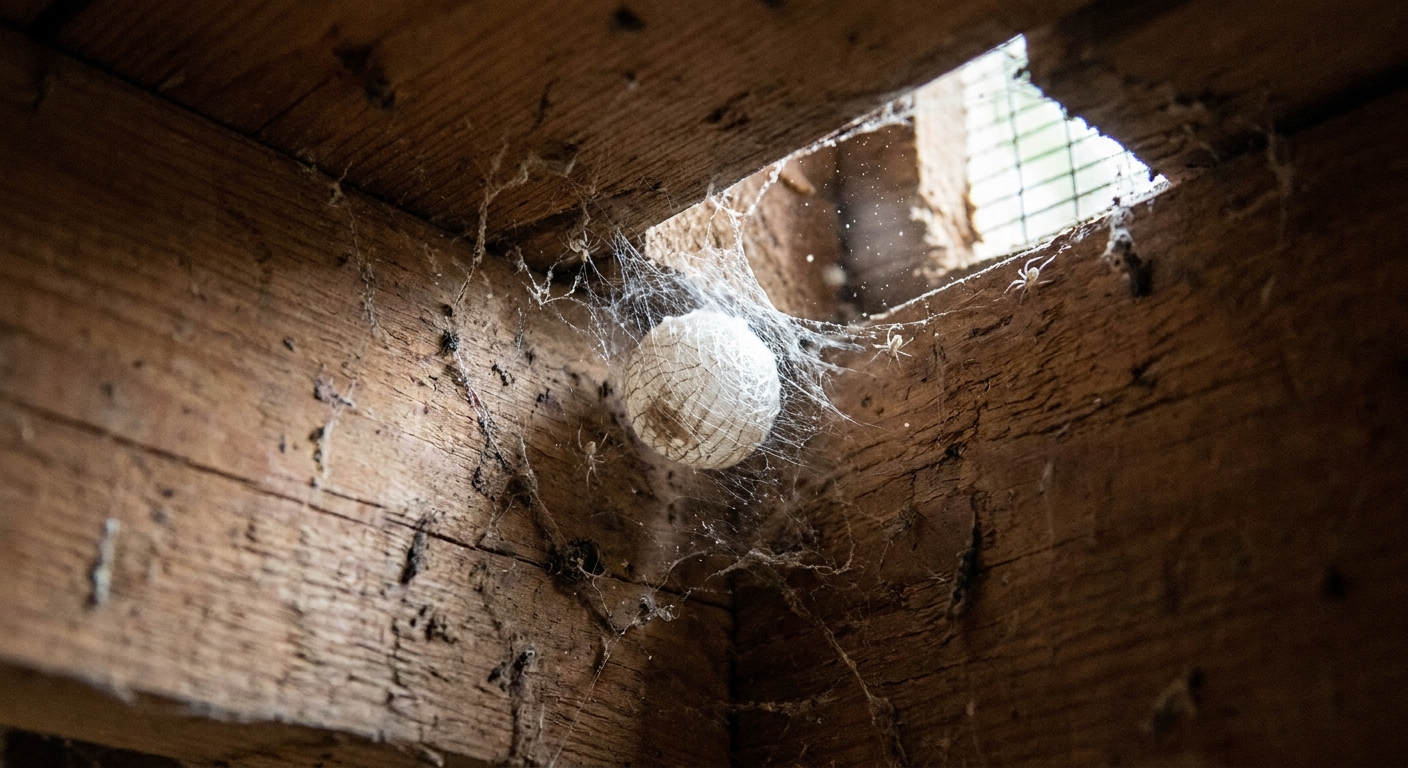
- Egg sacs: silken spheres or discs, each containing dozens to hundreds of eggs, often attached to joists or inside boxes
- Cast skins: spiders molt as they grow; translucent exoskeletons in webs indicate an established population
- Live or dead spiders: multiple sightings on separate visits strongly suggest breeding
- Insect debris: discarded legs and wings under webs show feeding activity
During inspection, we shine a light at a low angle across joists and sill plates; dust-free, taut webs glow and reveal active travel routes.
Challenges of Treating Hard-to-Reach Areas
Crawl spaces are physically demanding. Clearance may be less than three feet, forcing technicians to work on hands and knees. Uneven ground, exposed nails, ductwork, and plumbing create obstacles. Limited airflow means any product we use must be placed precisely to avoid unwanted drift into living areas.
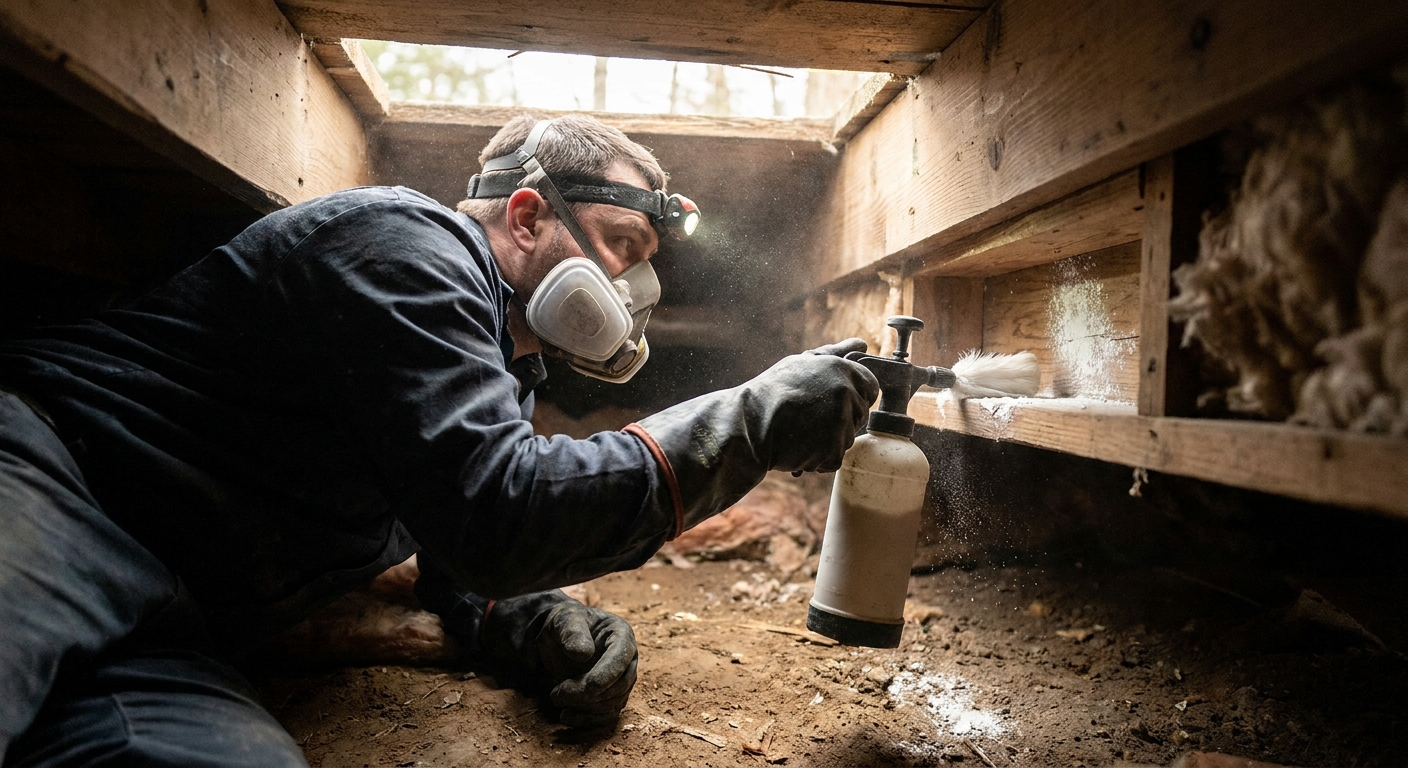
Standard liquid sprays applied to open floor areas are ineffective because spiders travel along vertical surfaces, inside voids, and under insulation. We use extension dusters to reach joist cavities, rim joists, and sill plate gaps from a distance. We may also need to remove insulation temporarily or work through small access panels. Confined space protocols, including monitoring and a second person outside, are standard.
Professional Inspection and Assessment
We begin by examining the crawl space entry, visible foundation cracks, and any signs of moisture. Inside, we inspect floor joists, subfloor sheathing, rim joists, piers, and stored items with a high-lumen headlamp. We note spider species, web locations, egg sacs, and the presence of prey insects like camel crickets or silverfish.
We also check vapor barrier condition, foundation vent screens, and gaps around plumbing penetrations. This tells us whether the infestation is actively reproducing or just an occasional invader. Based on findings, we recommend a treatment plan and any structural corrections needed for long-term control.
Professional Treatment Methods
The most effective professional treatment combines mechanical removal, targeted chemistry, and monitoring. We vacuum accessible webs, egg sacs, and spiders with a HEPA-filtered vacuum before applying any product. This immediately reduces the population and removes the silk that can interfere with insecticide contact.
Then we apply residual insecticide dust into floor joist voids, rim joist gaps, sill plate seams, and behind insulation, using a hand duster or powered duster. Dust particles settle into corners where spiders rest and remain effective for months when kept dry. For exposed surfaces, we use a liquid residual labeled for crawling insects along foundation walls, support piers, and subfloor perimeters.
Finally, we place professional-grade glue traps flat against walls and joists at regular intervals. These traps capture wandering males and ground-hunting species, confirm the infestation level, and help us decide if a follow-up treatment is needed. We never rely on a single method; the combination breaks the life cycle and reduces the insect prey that attracts spiders.
Integrated Pest Management and Prevention Strategies
Long-term control depends on making the crawl space less hospitable. We recommend installing or repairing a full-coverage vapor barrier over bare soil to reduce humidity. Sealing foundation cracks and gaps around pipes, vents, and cables with appropriate materials blocks spider and insect entry. Replacing cardboard boxes with sealed plastic bins reduces hiding spots and web anchors. Reducing clutter and keeping stored items off the ground makes inspection easier and removes egg sac locations.
- Installation or repair of a full-coverage vapor barrier
- Sealing gaps larger than a pencil lead around pipes, wires, and foundation
- Installing fine-mesh screens over foundation vents
- Removing organic debris, old cardboard, and unused stored items
- Reducing standing water and improving drainage outside the foundation
We also treat for the prey insects that spiders feed on, because without food, spider populations decline naturally. These steps are part of an ongoing prevention plan, not a one-time fix.
Safety Considerations for Crawl Space Treatments
Confined spaces require strict safety. We use PPE including respirators when applying dusts, gloves, knee pads, and disposable booties to prevent tracking product into living areas. We seal off the crawl space from the home’s air return during application and ventilate the space as needed.
We choose products registered for the intended use and follow label directions exactly. For clients who are sensitive to spray insecticides, we can use dusts or gel baits in targeted placements instead. The pesticides we use are Health Canada registered and tested, and they are applied only by trained technicians. Before treatment, we provide clear preparation instructions so that personal items are removed from areas we need to access. All dead pests and used traps are removed from the property and disposed of according to local regulations.
If you suspect spiders have moved into your crawl space, contact us to schedule an inspection. Our process starts with a thorough assessment and ends with a drier, less inviting space.