

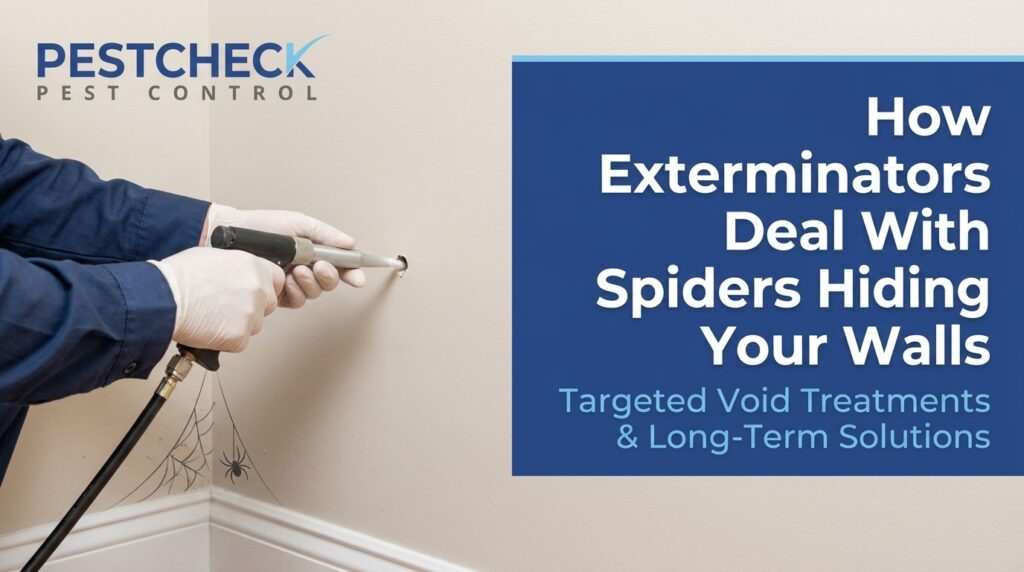
When you spot a single eight-legged intruder darting across your baseboards, it is rarely an isolated incident. The real problem often lies just out of sight, deep within the structural cavities of your home. Understanding how exterminators deal with spiders hiding inside your walls is critical for homeowners who want to move beyond temporary surface sprays and achieve genuine eradication. Because spiders are solitary, reclusive pests, they naturally gravitate toward the dark, undisturbed voids behind drywall to build webs, hunt for smaller insects, and lay egg sacs that can hold hundreds of spiderlings.
We approach these hidden infestations not by guessing, but by employing targeted void treatments and structural exclusion techniques. With over 20 years of experience protecting homes, our family-owned team knows that eliminating a wall-dwelling spider population requires disrupting their food source and physically penetrating their harbourage areas. By combining advanced diagnostic tools with professional-grade applications, we ensure that the hidden spaces of your home are thoroughly cleared of arachnid activity.
Identifying Common Spiders That Hide in Wall Voids
Before applying any treatment, our licensed technicians must first identify the exact species invading your home. Different spiders exhibit unique behaviours and habitat preferences, which dictates our approach to eradication.
Characteristics of Wall-Dwelling Spider Species
While many spiders prefer the outdoors, several species actively seek the climate-controlled safety of interior wall voids. Cellar spiders, house spiders, and fast-moving hunting species like wolf spiders frequently exploit gaps in your foundation to access the dark cavities behind your drywall. In rarer cases, more dangerous species with medically significant venom, such as black widows or brown recluses, may harbour in secluded, undisturbed structural voids. As a QualityPro certified company, our team relies on deep entomological knowledge to accurately identify these pests and determine their specific nesting habits.
Signs You Have an Infestation Behind the Drywall
Because spiders are masters of disguise, homeowners rarely see the full extent of a wall-void infestation. However, there are subtle indicators that our experts look for. You might notice irregular web patterns emerging from behind switch plates, around HVAC vents, or along expansion joints. Finding shed exoskeletons or tiny dark droppings near baseboards also strongly suggests an active population living just behind the paint. When these signs are present, it is time to initiate a professional response.
Professional Inspection: Locating Hidden Entry Points and Harbourage Sites
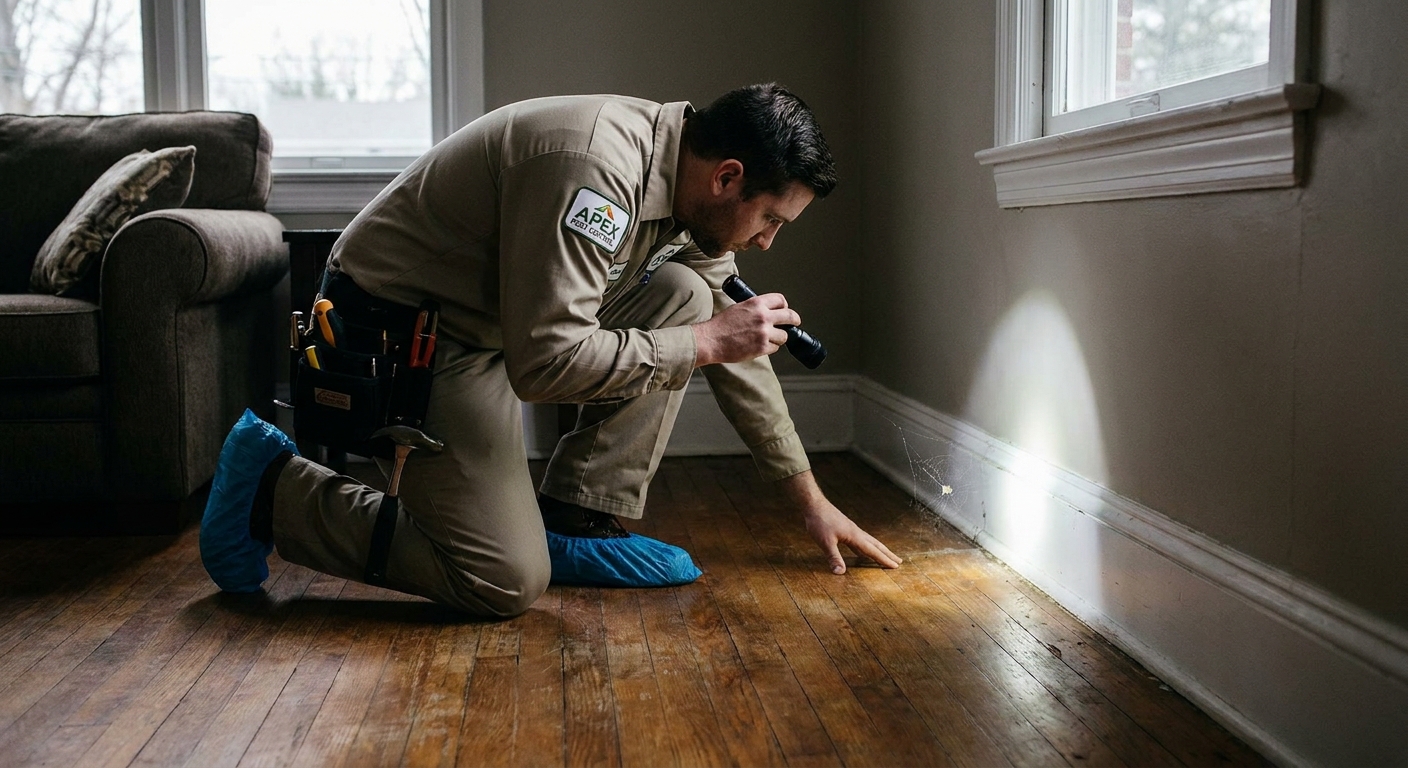
Every successful pest elimination begins with a comprehensive property inspection. Because your home is unique, our head technician, Stephen Scott, and our team of highly trained exterminators customize every service based on the specific environmental factors of your property.
Advanced Diagnostic Tools Used by Exterminators
We do not simply look at the surface; we investigate the structural integrity of your home. Our technicians use high-lumen flashlights, moisture meters, and specialized inspection mirrors to peer into the hidden depths of your home. Spiders often follow their food sources, meaning areas with high moisture that attract other insects are prime real estate for arachnids. By identifying these conducive conditions, we can map out the exact zones where spiders are thriving.
Pinpointing Micro-Crevices, Expansion Joints, and Food Sources
Spiders do not need large openings to infiltrate your walls. They can slip through micro-crevices around plumbing penetrations, gaps in window frames, and unsealed expansion joints. During our diagnosis phase, we provide you with detailed advice and recommendations regarding these entry points. We also identify the primary food sources—such as ants, flies, or beetles—that are drawing spiders into your wall voids in the first place.
Spot and Void Treatments: How Exterminators Deal With Spiders Hiding Inside Your Walls
Once the harbourage sites are located, we move to the treatment phase. This is where specialized professional techniques vastly outperform standard residential bug sprays, which cannot penetrate drywall.
Application of Commercial-Grade Dusts and Aerosols
To reach spiders hiding in enclosed spaces, we utilize commercial-grade insecticidal dusts and specialized aerosols. All of the pesticides we use are rigorously tested, registered, and deemed to be highly effective and safe when applied by our trained professional technicians. These dusts are designed to float through the empty space between your studs, lightly coating the interior surfaces where spiders walk and build their webs.
Penetrating Deep Wall Cavities Safely and Effectively
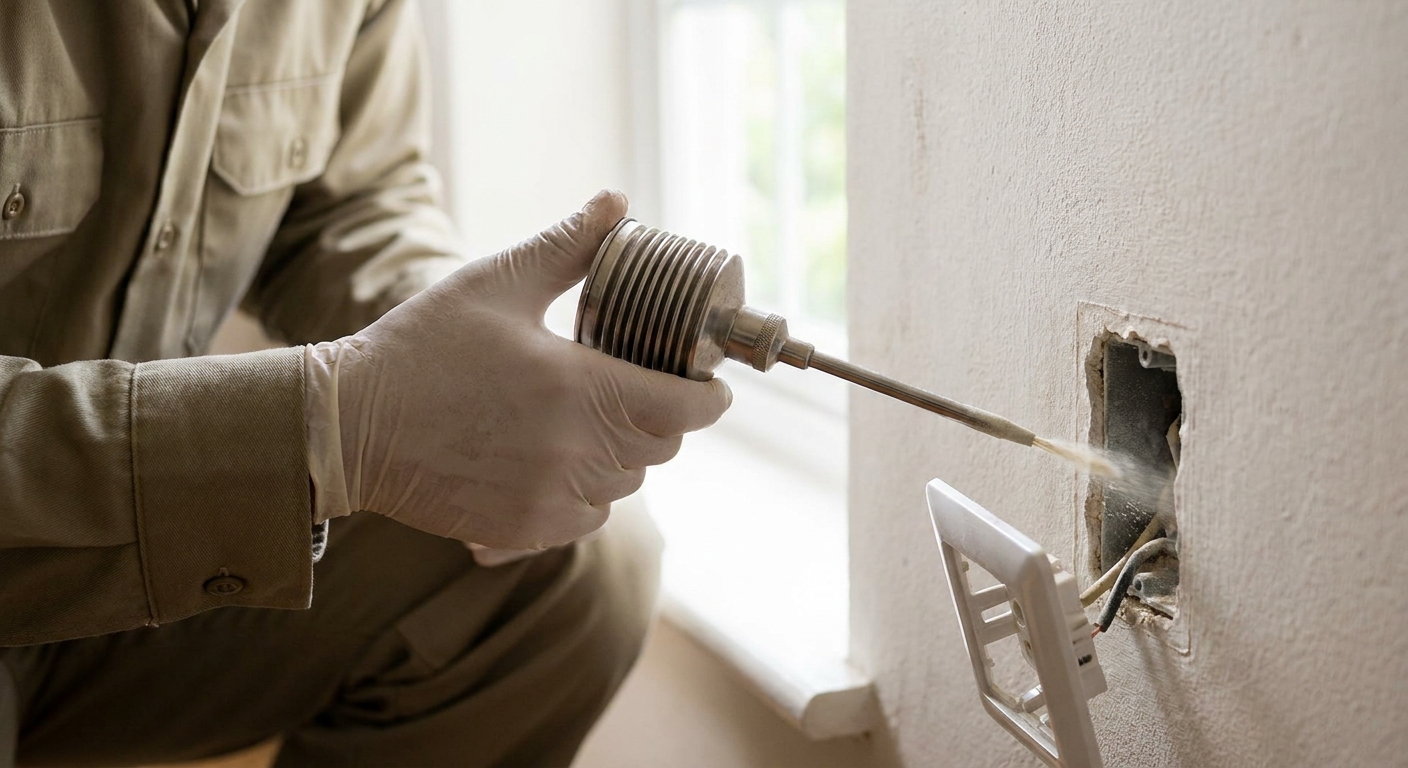
Safety and cleanliness are our top priorities. When accessing wall cavities, our technicians wear full personal protective equipment, including disposable booties, to ensure your home remains pristine. We carefully apply void treatments through existing structural openings, such as behind electrical outlets or plumbing gaps, ensuring the product gets exactly where it needs to go without damaging your walls. This targeted approach is a core reason we maintain a 98% treatment success rate.
Targeting Hidden Egg Sacs to Prevent Future Generations
Eliminating adult spiders is only half the battle. A single hidden egg sac can unleash hundreds of spiderlings into your walls. Our void treatments are specifically formulated to disrupt the spider life cycle, penetrating deep enough to neutralize these hidden egg sacs. By stopping the next generation from hatching, we ensure a long-lasting, bug-free environment.
Exterior Perimeter Treatments to Stop Wall Invasions
To truly protect your home, we must stop spiders before they ever reach your interior walls. Our comprehensive approach includes establishing a robust defense on the outside of your property.
Establishing a Residual Barrier Around the Foundation
We apply a continuous residual barrier around the base of your foundation. This treatment bonds to the exterior surfaces of your home, creating an invisible shield that repels and eliminates spiders attempting to cross it. Because we are so confident in our ability to keep insects away, we promise to keep working with our clients until they are completely satisfied with the results.
Targeting Exterior Migration Routes and Eaves
Spiders often scale the sides of homes and enter wall voids from the top down, utilizing gaps in soffits, eaves, and rooflines. Our technicians meticulously treat these high-migration routes. We also focus on deck areas, fences, and outdoor lighting fixtures, as lights attract the flying insects that spiders feed on.
Professional Exclusion and Habitat Modification
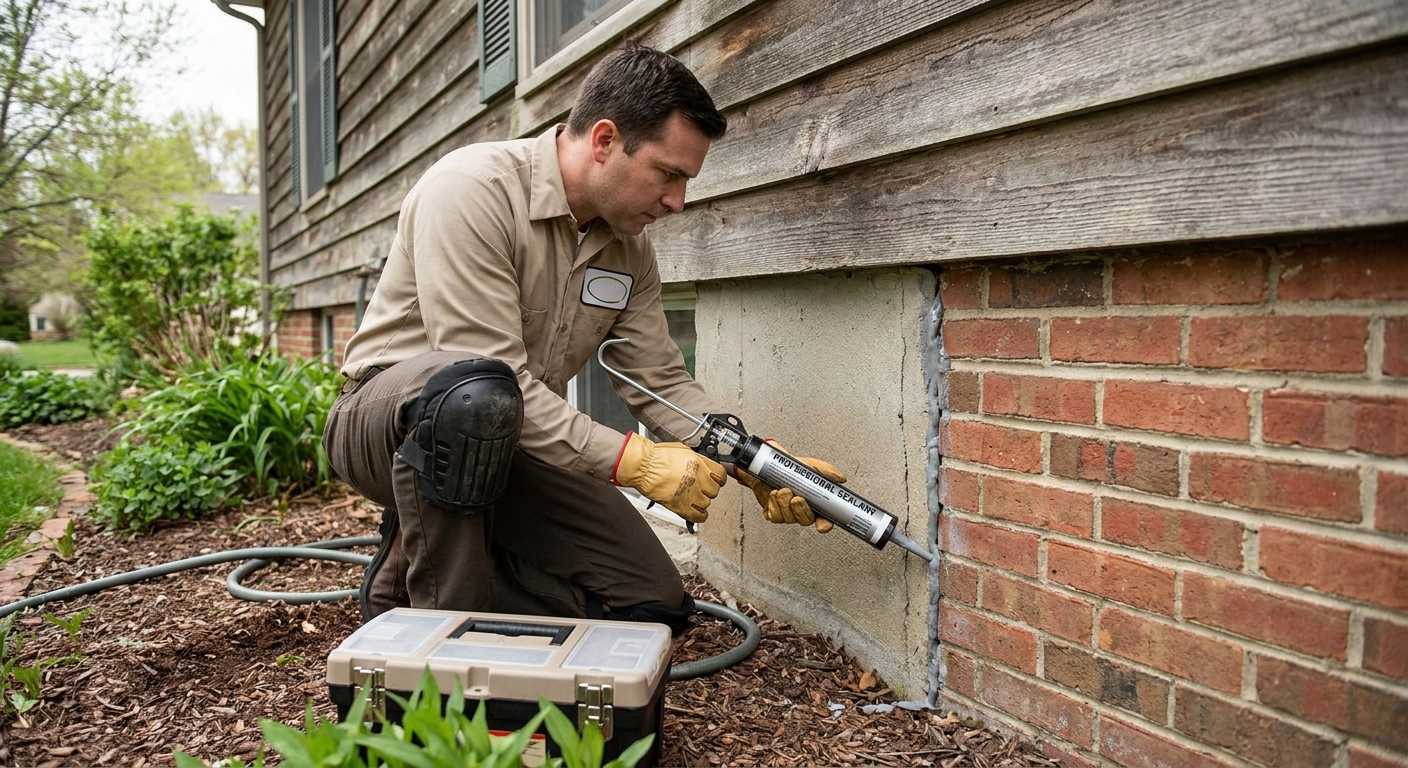
Chemical treatments are highly effective, but long-term success requires physical alterations to your home’s exterior to permanently deny spiders access to your wall voids.
Sealing Structural Vulnerabilities and Cracks
Exclusion is a critical step in our pest management process. We identify and recommend the sealing of key structural vulnerabilities, including:
- Cracked mortar and foundation gaps
- Unsealed utility line penetrations
- Damaged window screens and weather stripping
- Openings around exterior vents and crawlspaces
By closing these physical gateways, we trap existing spiders inside the treated wall voids while preventing new ones from entering.
Modifying Surrounding Habitats to Deter Spider Activity
Our commitment to environmental stewardship means we emphasize non-chemical habitat modifications whenever possible. We advise homeowners on how to reduce spider attractants by clearing overgrown vegetation near the foundation, moving firewood away from the house, and switching to yellow sodium-vapour outdoor lights that are less attractive to the insects that spiders hunt.
Strategic Monitoring and Long-Term Spider Population Control
Eradicating a wall-dwelling spider infestation requires ongoing vigilance. Our process does not end the moment the initial treatment dries.
Placement of Professional-Grade Glue Traps
To monitor the declining spider population, we strategically place professional-grade glue traps in dark corners, under furniture, and near suspected wall access points. These monitors capture wandering spiders and provide our technicians with crucial data on the specific species and the overall severity of the remaining infestation. This allows us to adjust our strategies dynamically.
Follow-Up Assessments to Ensure Complete Elimination
We believe in transparent communication and reliable service. Before your appointment, you will receive an email 24 hours in advance, and our technicians will arrive within 30 minutes of the designated time. During follow-up visits, we assess the monitoring traps, re-apply void treatments if necessary, and remove all dead pests from the premises. If our technicians are ever running late, they will text or call you directly—missing an appointment is incredibly rare for our dedicated team.
Securing Your Home Against Hidden Spiders
Dealing with spiders hiding inside your walls requires a level of expertise, specialized equipment, and structural knowledge that goes far beyond traditional pest control methods. As a family-owned business with over 1,500 happy clients and a 4.9 out of 5 service rating, we protect your home like it is our own. Our membership in the National Pest Management Association and our strict adherence to safety protocols ensure that you receive the highest standard of care.
If you suspect spiders have taken up residence behind your drywall, do not wait for the population to multiply. Reach out to our experienced team today for a comprehensive inspection, and let us restore the peace of mind that comes with a truly pest-free home.