

How to Get Rid of Carpenter Ants in Your House
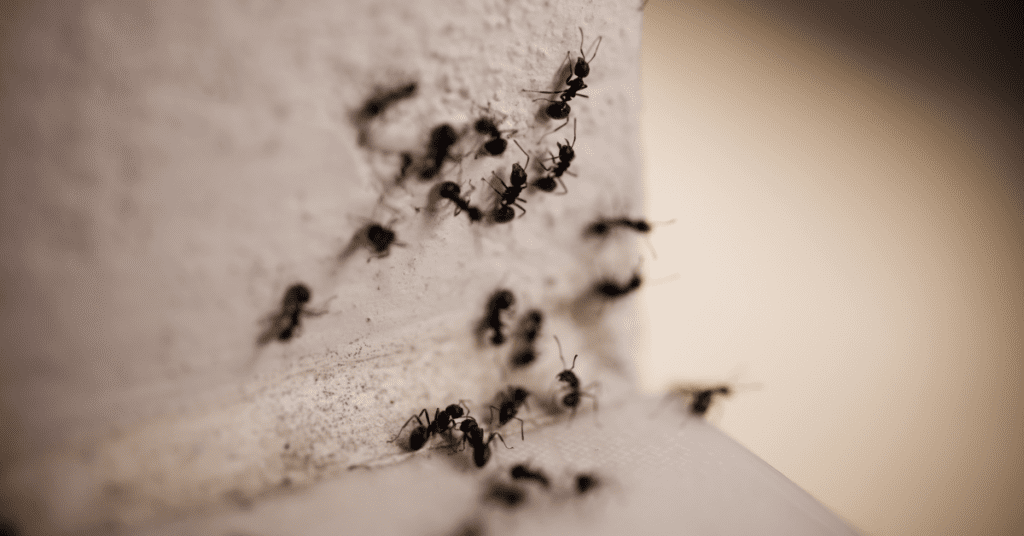
You notice a lone ant crawling across your kitchen counter. Then another. Then a small pile of what looks like sawdust near the baseboard. By the time most homeowners start searching how to get rid of carpenter ants in house, the colony has already been active for months, silently tunnelling through the wood frame of their home. Unlike termites, carpenter ants don’t eat wood — they excavate it, carving out smooth, polished galleries to build their nests. Over time, this hollows out beams, joists, wall studs, and window frames from the inside out. Because the damage starts behind walls or under floors where you can’t see it, many homeowners don’t take action until significant structural harm has already been done. This guide breaks down what professionals look for, how they approach treatment, and what it takes to make sure carpenter ants don’t come back.
Signs of a Carpenter Ant Infestation in Your House
Here are the key warning signs that professionals check for first when dealing with ants and other wood‑damaging insects.
Frass — The Sawdust That Isn’t Actually Sawdust and What It Means for Termites
One of the most telling signs of carpenter ant activity is the appearance of fine, powdery debris near wooden surfaces — often found below window frames, along baseboards, or near door frames. This material is called frass, and it may look like ordinary sawdust. In reality, it is a mix of wood shavings, insect body parts, soil, and waste. Ants push this frass out through small “kick-out” holes. They do this as they excavate and expand their tunnels.
Frass is coarser than termite pellets and tends to crumble when touched. Lighter-coloured frass shows the ants are excavating fresh, healthy wood. Darker frass means they are in moisture-damaged or fungus-infested wood. This is a serious structural red flag in a carpenter ant infestation. Over time, it can gradually worsen into extensive wood damage.
Hollow-Sounding Wood and Other Pests Warning Signs
Carpenter ants often leave the outer surface of wood completely intact while hollowing out everything beneath it. A simple tap test — knocking on a beam, wall panel, or window frame with your knuckles or a screwdriver handle — can reveal whether the interior has been compromised. A dull, hollow echo where there should be a solid thud is cause for concern and often points to active carpenter ant galleries inside.
Visible Tunnels or Galleries and Prevention Tips
Carpenter ant galleries are identifiable by how smooth and clean they are. The tunnels run with the grain of the wood and have a polished, almost finished appearance — very different from the rough, ragged damage left by termites.
Large Ants — Especially at Night Near Your Bait Stations
Carpenter ants are the largest ant species commonly found in Canadian homes, typically measuring between 6mm and 13mm in length, and are usually black or black with reddish-brown colouring. Spotting them inside — particularly in the evening when they’re most active — is a strong indicator that a nest may already be established nearby. Seeing winged black carpenter ants (swarmers) indoors is an especially urgent warning sign, as their presence almost always points to an established nest somewhere in the structure.
Faint Rustling Sounds in Walls
A subtle crinkling or rustling sound coming from inside a wall — particularly at night — can indicate carpenter ant activity. The sound is caused by worker ants moving through tunnels and excavating wood. If you hear it consistently in the same area, that section of wall deserves a closer look, especially if you suspect hidden ant colonies.
Getting Rid of Carpenter Ants in Your Home With Professional Orkin Support
Removing a carpenter ant infestation isn’t just about killing the ants you can see. The colony — including the queen — needs to be located and eliminated, or the problem will return. Here’s how professionals approach it for severe infestations and smaller problems alike, along with tips you can use between visits.
1. Locate the Nest
Finding the nest is the most critical step, and also the hardest. Carpenter ants typically keep a main colony outdoors in a tree stump, rotting log, or woodpile. They also build satellite colonies inside the home. These can be in wall voids, attics, or crawlspaces. They may also nest beneath insulation or inside structural timbers.
Professional pest technicians use a combination of tools and experience to track down nest locations:
- Following ant trails at night, when worker ants are most active
- Inspecting high-moisture zones around plumbing leaks, roof penetrations, and poorly ventilated crawlspaces
- Tapping and probing suspect wood for hollow cavities
- Thermal imaging cameras, which detect the heat differential created by large colonies behind walls without destructive investigation
Because carpenter ants can have multiple satellite nests throughout a structure, a thorough inspection of both the interior and exterior is essential. Treating only one nest while leaving other pests and hidden ant colonies untouched will not resolve the infestation. Accurate ant identification at this stage helps ensure the correct treatment plan and reduces the chance of future infestations.
2. Eliminate Interior and Exterior Sources of Moisture
Carpenter ants are drawn to moist, softened, or decaying wood because it’s easier to excavate. Addressing moisture issues removes the conditions that made your home a target in the first place.
Inside the home, professionals look for and recommend fixing:
- Leaking pipes under sinks, around dishwashers, and near washing machines
- Condensation on cold pipes in uninsulated crawlspaces or basements
- Poor ventilation in attics and crawlspaces
- Water-stained or soft wood around windows, doors, and roof lines
Outside the home, common moisture-related attractants include:
- Soil grading that directs rainwater toward the foundation
- Wooden siding or decking that stays wet after rainfall
- Gutters and downspouts that overflow or deposit water near the perimeter
By tackling moisture problems, you make life harder for carpenter ants. You also make it harder for other insects and black ants that may invade. Aphids and similar small pests are also less likely to move in. These pests are strongly attracted to damp environments.
3. Seal Entry Points
Carpenter ants can slip through cracks in the foundation, gaps around utility pipes, spaces between window frames and siding, and directly through soft, rotting wood. Professional inspections include a systematic review of the building exterior to identify and seal these access points:
- Gaps around electrical conduits, plumbing pipes, and HVAC penetrations
- Cracks in the foundation, especially near grade level
- Deteriorated weatherstripping around doors and windows
- Joints where different building materials meet — wood siding to brick, or decking to the house frame
Technicians also look for structural wood that touches the soil directly. This contact speeds up decay in the wood. It also gives carpenter ants a direct bridge into the home. It lets ant nests form very close to the structure. Sealing these gaps is one of the most effective tips for preventing future infestations.
4. Remove Outdoor Attractions
The parent colony almost always originates in a yard or wooded area nearby, and worker ants forage outward — sometimes 90 metres or more — looking for satellite nesting sites. When your yard provides the right conditions, your home becomes the next logical step.
- Remove or relocate firewood stored against the exterior — firewood stacks are one of the most common parent colony sites
- Clear away dead stumps, fallen logs, and decaying wood debris from the yard
- Trim back tree branches and shrubs that touch or overhang the roofline
- Keep mulch and landscaping bark away from the foundation
- Store garbage in sealed containers and clean up food or grease residue near outdoor cooking areas
Many professional pest control company technicians also recommend using targeted ant bait outdoors to intercept foraging workers before they reach the house. In some cases, a residual spray barrier may be applied around the foundation to help keep carpenter ants and other pests from entering.
When to Call a Professional to Treat a Carpenter Ant Infestation
Some pest problems can be managed with store-bought products. Carpenter ants are generally not one of them.
The colony is almost always larger and more distributed than it appears. The ants you see are only foraging workers — a small fraction of the total colony. The queen, brood, and bulk of the colony are hidden deep inside wood structures or wall voids, often in multiple locations. Surface treatments provide only temporary relief without locating and treating every nest, especially when there is a strong presence of carpenter ants throughout the building.
Over-the-counter baits are largely ineffective. Carpenter ants are not consistent bait feeders. Professionals have access to specially formulated baits and injectable insecticide dusts and foams that can be delivered directly into galleries and wall voids — reaching the colony where it actually lives. When needed, they may supplement baits with a carefully targeted spray applied to high‑activity areas, following label directions to reduce exposure to people and pets.
Misidentification leads to the wrong treatment. Carpenter ants are sometimes confused with termites, which require an entirely different approach. A trained technician can accurately identify the pest and the extent of the infestation. They can spot subtle differences in the antennae and wings of flying insects. These details help them tell carpenter ants apart from termites.
An active infestation will only grow. A mature colony can house several thousand workers and begin producing swarmers within a few years. The longer it goes untreated, the more satellite nests become established and the more extensive the structural damage becomes, increasing the risk of serious ant bites for anyone disturbing the nest.
How Pestcheck Can Help
If you’re dealing with carpenter ants in Metro Vancouver, Pestcheck is a family-owned, locally operated company with over 20 years of combined professional experience.
Every service begins with a thorough inspection by a licensed technician to identify nest locations and develop a treatment plan specific to your property. Pestcheck uses an Integrated Pest Management (IPM) approach — targeting the root cause of the infestation while minimizing unnecessary pesticide use and offering natural carpenter control options when appropriate.
Pestcheck holds both QualityPro and GreenPro certifications. We were the 22nd company out of over 1,200 pest control companies in Canada to receive QualityPro certification — placing them in the top 1.7% of Canadian pest control providers. All products are Health Canada registered and applied by licensed technicians.
Our process:
- Contact — Reach out to discuss your specific situation with a pest control professional. Book an appointment with a trusted pest control company such as Pestcheck or Orkin for expert help. This is especially important if you suspect hidden structural damage to wooden parts of your home.
- Inspection — A licensed technician inspects your home inside and out, checking for carpenter damage, ant nests, and conditions that attract other insects.
- Diagnosis — You receive a clear explanation of the problem and your treatment options. This helps you understand exactly how to get rid of carpenter ants in the house. You also learn how to keep them from returning in the future. You get personalized tips to help you avoid future infestations.
- Treatment — Carried out with progress reports throughout, which may include targeted ant bait, dusts, and foams applied directly into carpenter galleries. In some cases, your technician may also recommend a low‑impact natural carpenter ant treatment that integrates physical exclusion, habitat modification, and selective products.
Final Thoughts
Carpenter ants are patient, persistent, and far more destructive than most homeowners expect. The good news is that a thorough professional approach can solve the problem. It starts with locating every nest. It also includes eliminating moisture and sealing entry points. Removing outdoor attractants is another key step. Taken together, these actions stop the damage and help prevent it from coming back.
Don’t wait. Every season an infestation goes untreated is another season of tunnels being carved through your home’s structure by carpenter ants and black ants. Acting early keeps the problem manageable and repair costs lower. It also helps keep your home protected for the long term. This is especially effective when you work with experts like Orkin or another professional pest control company.