

Many homeowners worry when they spot a wasp nest high in a tree, but the height itself is often a safety advantage. Wasps are defensive only near their nest, and a nest that is well above head height and away from walking paths is unlikely to bother anyone. If the tree is not being pruned, climbed, or shaken, the colony usually carries on without incident and dies off naturally in fall.
That said, the answer to ‘Is It Safe to Leave a Wasp Nest Alone if It’s High Up in a Tree?’ depends on more than just altitude. You need to look at how close the nest is to areas where people gather, whether anyone has a sting allergy, and what time of year it is. Below we break down the signs that tell you when leaving the nest alone is the right call, and when you should get help.
When It’s Generally Safe to Leave a Wasp Nest Alone
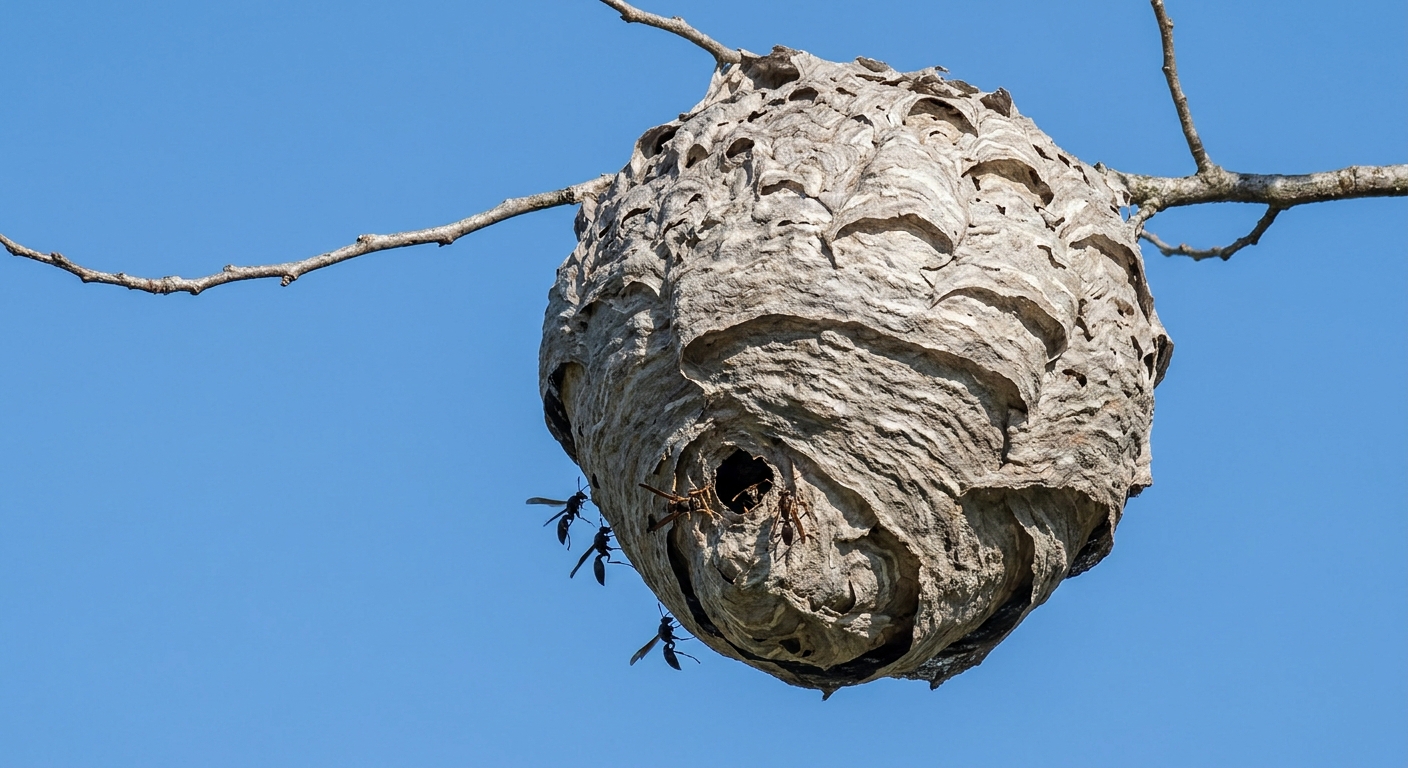
Most wasp nests do not need to be destroyed. The key is whether the nest location creates a real chance of human-wasp conflict. If you can stand directly under the nest without being near the entrance, and no one needs to use that space, the risk is very low.
Key Factors for Assessing Safety
We look at three main things before deciding a nest can be left: physical distance from people, the amount of flight traffic, and whether anyone nearby is allergic to stings. A nest high in a tree scores well on distance, but even a high nest can be a problem if it overhangs a deck, playground, or mailbox.
- Distance from the nest entrance to the nearest area where people sit, walk, or work
- Whether tree branches are likely to be disturbed by wind, pruning, or children throwing things
- The number of wasps entering and leaving per minute during warm daylight hours
- Any history of wasp stings or severe allergic reactions in the household
Distance from Human Activity
A wasp nest 20 feet up in a tree that is 30 feet from the house is usually a good candidate to leave alone. Wasps focus on the immediate space around the entrance, roughly a few feet in any direction. Unless you climb a ladder or mow directly beneath and send vibrations up the trunk, the colony will not view you as a threat.
Nest Activity Level
Watch the nest for five minutes from at least 30 feet away. Steady comings and goings mean the colony is active and will defend if provoked. Very little traffic in late summer or fall often means the nest is already in decline, and the remaining wasps will die off after a few cold nights. An empty-looking nest in winter is almost certainly abandoned.
Why High-Up Nests in Trees Are Often Safer to Ignore
Height provides a natural buffer that reduces almost every common wasp sting scenario. Most stings happen when people accidentally step on a ground nest, brush against a nest hidden in vegetation, or try to knock down a nest that is within reach. A nest high in a tree removes those accidental contacts.
Reduced Risk of Accidental Disturbance
Ground-level and eave-level nests are easy for pets, children, and lawn equipment to disturb. A tree nest that requires a ladder to reach is naturally out of the way, so daily activities rarely come close enough to trigger a defensive response.
Natural Buffer Zone
Wasps defend a zone around the entrance. The higher the nest, the larger that buffer can be without any effort from you. Even if the nest is large, its elevation means the flight path usually goes upward and away from living spaces.
Lower Likelihood of Defensive Attacks
Defensive attacks are a response to a perceived threat to the nest. When the nest is high, the wasps do not interpret people walking on the ground as a direct attack. Most colonies will ignore you entirely as long as you stay off the branch and do not block the entrance.
The Annual Lifecycle of Wasps and Nest Abandonment
One of the strongest reasons to leave a high nest alone is that it is temporary. Social wasps in this region do not reuse the same nest from year to year. The entire colony dies off in fall except for newly mated queens, which hibernate elsewhere and build new nests the following spring.
Spring: Nest Construction and Colony Growth
A single queen starts the nest in spring, chewing wood into a papery pulp and laying the first eggs. The colony grows slowly at first, then faster as the first workers emerge and take over foraging and nest building.
Summer: Peak Activity
By late summer the nest can hold hundreds or thousands of workers, depending on the species. This is when wasps are most visible and may become a nuisance around food and drink, but they are still focused on feeding larvae and are not inherently aggressive unless the nest is threatened.
Fall: Abandonment and Natural Die-Off
As days shorten and temperatures drop, the colony produces new queens and males. After mating, the queens leave to find overwintering sites, and all the workers and the old queen die. The nest becomes empty and is never used again. A hard frost usually ends the activity for good.
Understanding Wasp Aggression and Defensive Behavior
Wasps are not mindless attackers. They sting to protect the colony, and the vast majority of stings happen within a few feet of the nest. Knowing what triggers them helps you avoid provoking a high nest.
Triggers for Defensive Attacks
Rapid movement, loud vibrations, blocking the nest entrance, or physically touching the nest or its branch can all set off a defensive response. Even a football-sized nest high in a tree will generally not attack people walking underneath if they move calmly.
Alarm Pheromones and Swarm Response
When a wasp stings, it releases alarm pheromones that signal other workers to join the attack. This is why one sting often becomes many. If you are stung near a nest, move away quickly and do not swat; swatting releases more pheromones and makes the response worse.
How to Avoid Provoking Wasps
- Do not throw objects at the nest or shake the branch
- Keep pruning and tree work for late fall or winter when the nest is empty
- Do not stand directly under the entrance and stare upward for long periods
- Keep sweet foods and drinks covered when outdoors near the nest
When a High Wasp Nest Becomes a Safety Hazard
There are clear exceptions where even a high nest should not be ignored. The main ones involve human traffic, structural risk, and medical vulnerability.
Proximity to High-Traffic Areas
If the branch overhangs a doorway, deck, playground, or path used daily, the risk rises. In these spots, fallen insects or defensive attacks from accidental branch movement are more likely. A nest directly above a seating area is not a good candidate for leaving alone.
Risk of Falling Nest Debris
An old nest can become heavy, especially after rain, and a dead or weakened branch may break. If the nest is over a parked car, walkway, or play area, the physical danger of falling material adds to the sting risk.
Allergy and Sting Sensitivity Concerns
If anyone in the home has a known allergy to wasp stings, or a history of severe reactions, no nest is safe enough to ignore. Even a single sting can trigger anaphylaxis, so removal or avoidance planning should happen early.
Having removed wasp nests for more than 20 years, we know that many high nests are safer to leave than to treat. But when a nest is over a frequently used area or someone has a sting allergy, we recommend a professional look before anyone gets stung.
The Ecological Benefits of Leaving Wasp Nests Alone
Wasps have a reputation as pests, but they are also valuable predators and pollinators. Leaving a high nest in a tree lets the colony do that work for your garden and the wider ecosystem.
Pollination Services
While not as efficient as bees, many wasps visit flowers for nectar and transfer pollen in the process. They are especially active in cooler weather when bees are less mobile, helping pollinate early- and late-season blooms.
Natural Pest Control
Worker wasps hunt caterpillars, flies, aphids, and other insects to feed their larvae. A single colony can remove thousands of garden pests over a summer, acting as a free biological control.
Contribution to Biodiversity
Wasps are part of the food web. Birds, mammals, and other insects prey on them, and their abandoned nests provide shelter for some solitary bees and other invertebrates. Keeping the nest intact supports local wildlife.
Identifying Active vs. Abandoned Nests: A Seasonal Guide
Before you decide what to do, confirm whether the nest is still live. This can save you from unnecessary worry and unnecessary treatment.
Signs of an Active Nest
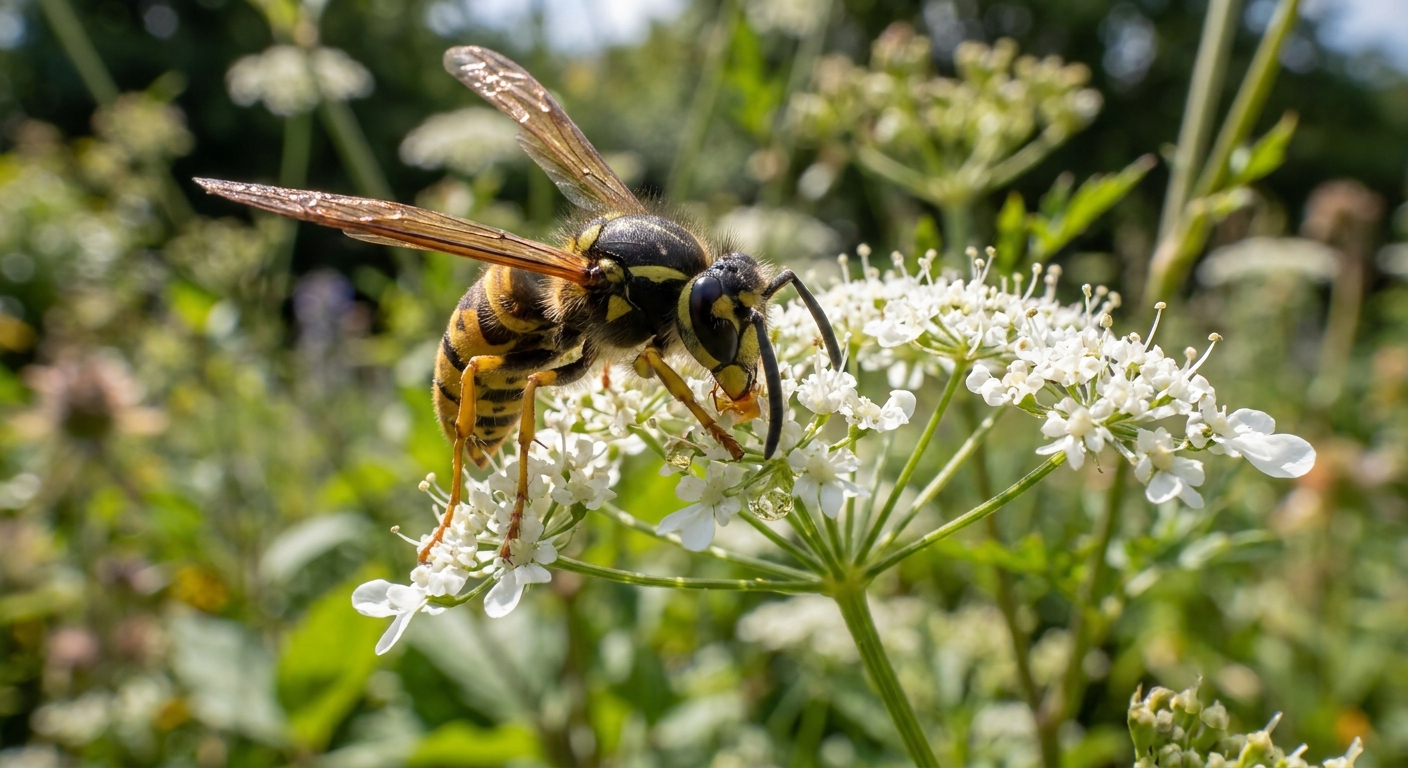
You will see wasps entering and exiting through a single opening, often at a steady rate during warm, sunny days. You may also hear a faint rustling or buzzing if you are close enough, and fresh paper material may be visible on the nest exterior.
Indicators of Abandonment
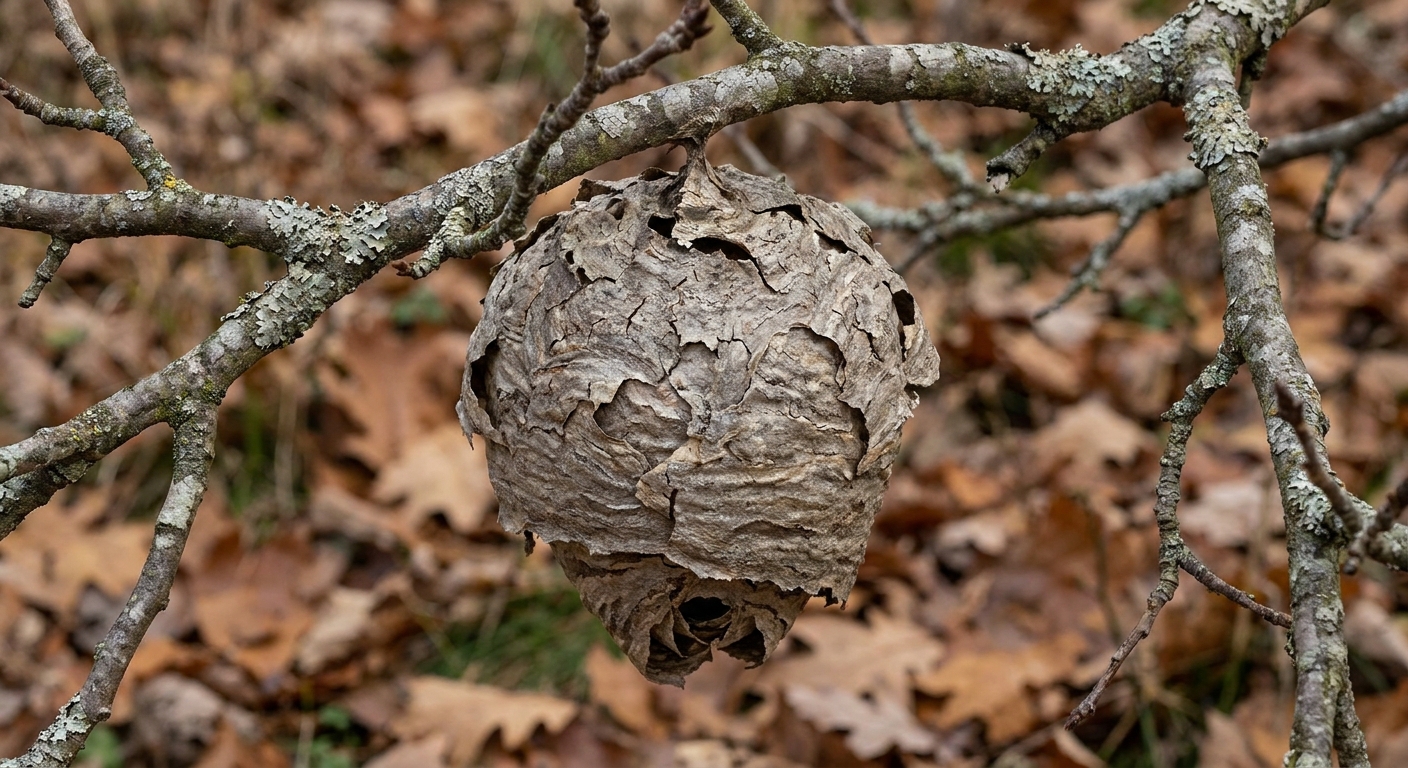
No wasp traffic for several warm days, a paper envelope that looks dull, cracked, or water-stained, and visible holes in the outer shell all suggest the colony has died. If you see no wasps after several minutes of observation in mild weather, the nest is probably empty.
Using Time of Year to Determine Status
Early spring through mid-summer, most nests are active and growing. Late September onward, many social wasp colonies are in decline, and after the first hard frost nearly all are dead. A nest found in winter is almost certainly abandoned and can be left or removed without risk.
How Local Weather Patterns Affect Wasp Nests
Weather shapes how active and how long-lived a wasp colony will be. You do not need a weather station to use this; just pay attention to temperature and rainfall around the nest.
Impact of Temperature on Wasp Activity
Wasps are cold-blooded and become sluggish below about 50°F (10°C). Sustained freezing temperatures kill workers and eventually the queen if she has not left to hibernate. A hot, dry summer can extend colony activity later into the fall.
Rainfall and Nest Viability
Heavy rain can damage exposed paper nests, especially if they are not sheltered by leaves. Prolonged wet weather may weaken the nest and cause it to fall earlier. Drought, on the other hand, reduces natural food and can make wasps more persistent around human food sources.
Seasonal Variations in Your Region
In areas with warm winters, some wasp colonies can survive longer or re-establish early. In colder climates, the first hard frost reliably ends the nest season. If your area has an extended warm spell in autumn, treat a high nest as active longer than usual.
What to Do If You Accidentally Disturb a High Wasp Nest
Accidents happen, even with high nests. A falling branch, a thrown ball, or a ladder against the trunk can trigger a defensive swarm. Knowing what to do in the first few seconds reduces your chance of being stung.
Immediate Steps to Minimize Stings
Move away quickly but calmly, covering your face and neck with your hands or a jacket. Do not swat, do not crush wasps against your skin, and do not jump into water. Get indoors or into a car and close windows and doors. Once inside, check for wasps that may have followed you.
Recognizing Severe Allergic Reactions
For most people, a wasp sting causes pain, redness, and swelling that fades in a few hours. But watch for signs of a severe reaction: swelling of the lips, tongue, or throat, difficulty breathing, dizziness, nausea, or a rapid heartbeat. These can start within minutes and require emergency care.
When to Seek Medical Attention
Call emergency services if anyone shows signs of anaphylaxis after a sting. Also seek medical help for multiple stings, stings in the mouth or throat, or if the person has a known wasp allergy, even if they have an epinephrine auto-injector. Do not wait to see if symptoms improve.
When to Call a Professional for Wasp Nest Removal
There is no shame in getting expert eyes on a high nest. If you are unsure whether a nest can be left alone, a professional can assess the location, activity, and risk factors in minutes.
Large or Difficult-to-Reach Nests
A nest the size of a basketball or larger high in a tree may contain thousands of workers. Reaching it safely requires equipment and experience. If the nest is beyond easy ladder range, professional removal is the safer choice.
Nests in High-Risk Locations
If the nest overhangs a door, play area, parking spot, or path, the risk is too high to ignore. Even an abandoned nest can fall and cause alarm or minor injury. We can advise whether the nest needs treatment or simply removal after the colony dies.
Persistent Wasp Activity
If you see wasps in your home or garage even though the nest is high in a tree, they may have found a secondary entrance or there may be another nest nearby. Persistent indoor wasp sightings are a sign to call a professional for a full inspection.
If you are still unsure about a high wasp nest on your property, contact us for a no-pressure assessment. We will help you understand what you are looking at and whether it is safe to leave alone.