

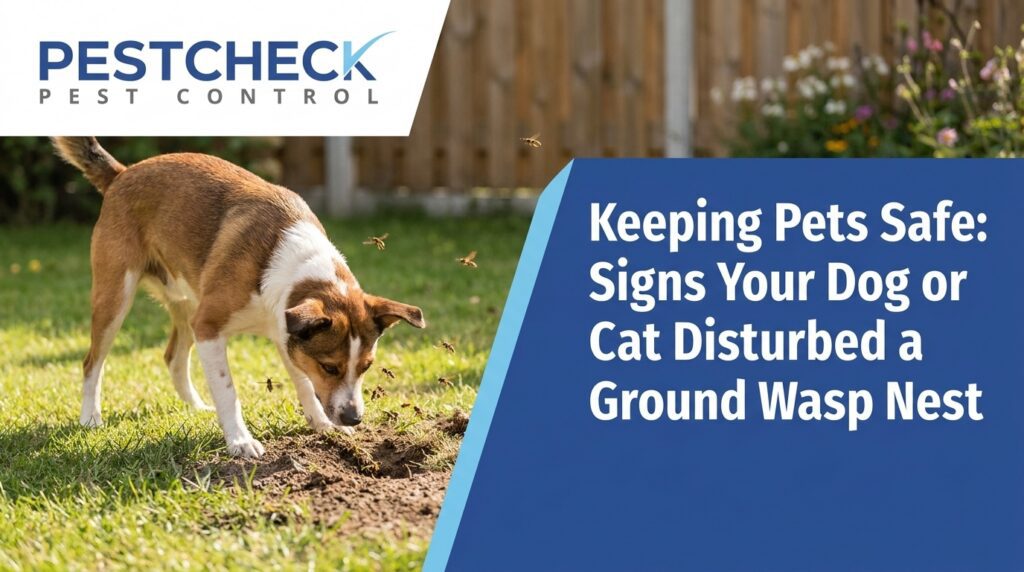
Nothing ruins a beautiful afternoon outdoors quite like an unexpected encounter with stinging insects. When dogs and cats explore the yard, their natural curiosity often leads them to investigate interesting scents and unusual holes in the dirt. Unfortunately, this inquisitive behavior puts them at a high risk of encountering ground-dwelling yellowjackets and hornets. Understanding the core elements of Keeping Pets Safe: Signs Your Dog or Cat Disturbed a Ground Wasp Nest is crucial for any pet owner who wants to prevent a painful emergency.
If your furry companion suddenly yelps and runs away from a specific patch of grass, you need to act quickly. Wasps that nest in the soil are notoriously aggressive when their homes are threatened, and a single misstep by a heavy paw can trigger a massive swarm. In this guide, we will walk you through the behavioral and physical red flags that indicate your pet has crossed paths with a ground nest, along with the immediate steps you should take to ensure their well-being.

Why Dogs and Cats are Vulnerable to Ground Wasp Nests
The Danger of Curious Noses and Paws
Dogs and cats experience the world primarily through their senses of smell and touch. When they detect movement or a strange scent beneath the soil, their first instinct is to push their muzzle into the grass or start digging with their paws. This natural foraging and hunting behavior unfortunately makes them the perfect targets for ground-nesting insects. Unlike humans who might spot the warning signs of a flight path and steer clear, pets will often press their faces directly into the danger zone. At Pestcheck Services Limited, our team has seen firsthand how quickly a playful digging session can turn into a frantic situation. With over 20 years of experience protecting homes and families, we know that pets are almost always the first to discover an infestation.
Common Hiding Spots for Ground-Dwelling Wasps
Ground wasps, such as certain species of yellowjackets, prefer to build their colonies in abandoned rodent burrows, hollow logs, or loose soil near the base of trees and shrubs. They often select low-traffic areas of the yard, such as overgrown brush, the edges of garden beds, or underneath thick ground cover. Because the entrance to a ground nest is usually no larger than a golf ball, it is incredibly difficult to spot with the naked eye. Homeowners and their pets typically only realize a nest is present when the surrounding soil is vibrated by footsteps.
Physical Signs Your Pet Disturbed a Wasp Nest
Sudden Swelling Around the Face and Muzzle
If your pet has been investigating a nest, the most common areas for them to be targeted are the nose, lips, and eyelids. When considering Keeping Pets Safe: Signs Your Dog or Cat Disturbed a Ground Wasp Nest, rapid, localized swelling in these facial regions is one of the most immediate indicators. You may notice your pet’s muzzle puffing up significantly within minutes of the encounter. Because wasps do not lose their stingers after a single strike, they can inflict multiple wounds in a very short amount of time, leading to severe inflammation and redness.

Paw Tenderness, Limping, and Excessive Licking
When a pet steps directly onto a nest entrance, their paws take the brunt of the defensive swarm. If you observe your dog or cat suddenly lifting a limb, hobbling, or refusing to put weight on a specific foot, they may have been stung on their sensitive paw pads. Following the incident, they will likely engage in obsessive licking or nibbling at the affected toes in an attempt to soothe the burning sensation.
Vocalizations and Behavioral Changes
A sudden, sharp yelp or a prolonged whine is often the very first indicator that your pet is in distress. Beyond the initial cry of pain, you might notice drastic behavioral shifts. A normally calm dog may become highly agitated, pacing restlessly, panting heavily, or rubbing their face frantically against the grass or living room carpet. Cats might dart into the house and hide under furniture, hissing or growling if you try to approach them.
Immediate First Aid for Wasp Stings on Pets
Safely Locating and Removing the Stinger
While wasps typically retain their stingers, bees do not, and in the chaos of a stinging incident, it is important to verify exactly what attacked your pet. If a stinger was left behind, it will continue to pump venom into the skin. Carefully inspect the swollen area. If you spot a stinger, do not pinch it with tweezers, as this can squeeze more venom into the wound. Instead, take a stiff piece of cardboard or a credit card and gently scrape it across the skin to dislodge the stinger.
Applying Cold Compresses to Reduce Localized Swelling
Once you have assessed the area, your next priority is to minimize the swelling and provide pain relief. Wrap an ice pack or a bag of frozen vegetables in a clean, thick towel and hold it gently against the sting site for about ten minutes at a time. The cold temperature helps constrict the blood vessels, slowing the spread of venom and numbing the sharp pain. At Pestcheck Services Limited, we always recommend keeping a pet-specific first aid kit handy for exactly these types of unexpected outdoor emergencies.
Recognizing Signs of Severe Allergic Reactions (Anaphylaxis)
Just like humans, some dogs and cats are highly allergic to insect venom. Anaphylaxis is a severe, life-threatening allergic reaction that requires immediate emergency veterinary care. Watch your pet closely for at least an hour after the incident. Critical warning signs include:
- Extreme difficulty breathing: Heavy wheezing or panting that does not subside.
- Profound weakness: Sudden lethargy or an inability to stand up.
- Pale gums: A sign of poor circulation and a drop in blood pressure.
- Gastrointestinal distress: Sudden vomiting or diarrhea.
- Rapid swelling: Inflammation that spreads rapidly to the neck and throat, potentially blocking their airway.
If your pet exhibits any of these symptoms, do not wait—transport them to the nearest emergency vet clinic immediately.

Protecting Your Pets from Future Wasp Encounters
Routine Yard Inspections for Hidden Nests
The best way to keep your furry family members safe is to prevent encounters from happening in the first place. Make it a habit to slowly patrol your property once a week during the warmer months. Look for consistent insect flight patterns, such as wasps flying back and forth in a straight line toward a specific patch of grass. If you discover a nest, keep your pets indoors and rely on professional intervention. With a 98% treatment success rate, a 4.9/5 service rating, and over 1,500 happy clients, our fully licensed and background-checked technicians at Pestcheck Services Limited have safely removed over 10,000 wasp nests. We utilize treatments that are registered and tested to ensure they are relatively safe for the environment and your pets when applied by our professionals.
Establishing Safe Play Boundaries During Wasp Season
If you know there is active stinging insect activity near the edges of your property, use temporary fencing or leash walks to keep your pets away from the danger zones. We understand that homeowners worry about the safety of pest management products around their animals. That is why our family-owned and operated team, led by owner and head technician Stephen Scott alongside manager Julie Scott, always walks you through our procedures. As a QualityPro certified company and proud members of the National Pest Management Association, we offer eco-friendly options and provide a detailed preparation sheet so you know exactly how to manage your pet’s boundaries. We promise to keep working with our clients until they are completely satisfied, ensuring a bug-free and safe yard for your pets.
Conclusion: Ensuring Your Pet’s Outdoor Safety
Keeping your pets safe from ground-dwelling insects requires a combination of vigilance, quick recognition of symptoms, and rapid first aid. By reading our guide on Keeping Pets Safe: Signs Your Dog or Cat Disturbed a Ground Wasp Nest, you can act decisively to comfort your pet and prevent a minor sting from escalating into a major medical crisis. Always consult your veterinarian if you are unsure about your pet’s health following a sting, especially if they were attacked by a swarm.
To maintain a secure outdoor environment, partner with a dedicated pest management team. Our comprehensive process—from the initial comprehensive property inspection to expert diagnosis and customized treatment—is designed to protect your home like it is our own. We send a 24-hour prior email with a 30-minute arrival window, wear disposable booties to respect your property, and ensure all dead pests are completely removed. Keep your yard safe for every member of your family, on two legs or four, by staying proactive against hidden stinging threats.