

You spot a large, dark, winged insect crawling across your kitchen counter or worse, emerging from a crack in your wall. Your stomach drops. Is it a termite? A carpenter ant? Both are notorious destructive pests for destroying homes from the inside out, and both are common in Metro Vancouver and the surrounding Fraser Valley. These pests often get lumped together, but they are very different. That difference matters a lot for protecting your home. When you understand termites vs carpenter ants, you can respond faster. You can avoid thousands of dollars in repairs. This is true for termites, carpenter ants, and even bed bugs.
Misidentifying one for the other can lead to wasted time, ineffective treatments, and ongoing structural damage that quietly worsens month after month. This guide breaks down how to tell them apart. It explains what professionals do to eliminate them. You will fully understand key behavioral differences. You will see why the right treatment matters. Each enemy invading your home may need a different approach.
Do Carpenter Ants and Termites Look the Same?
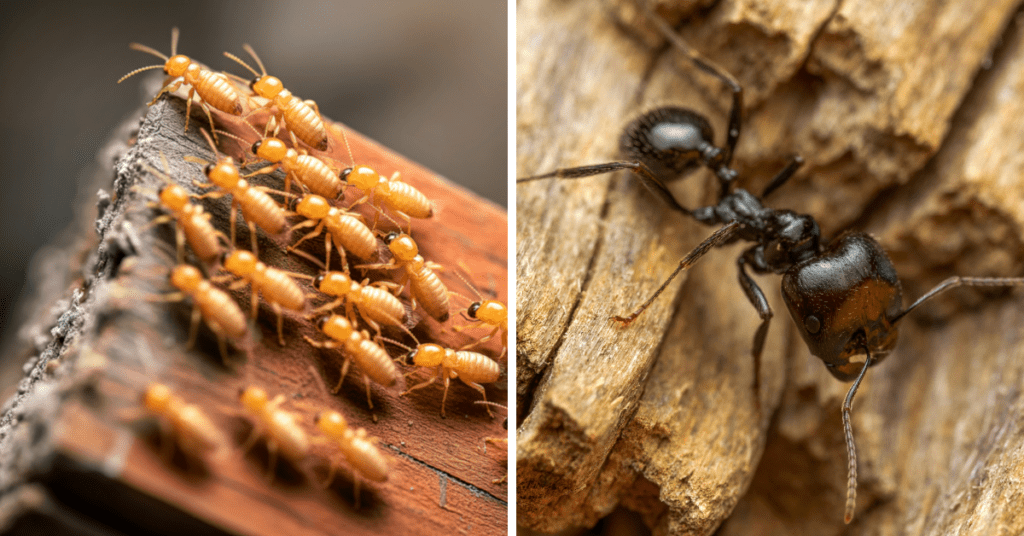
At first glance, especially when they’re small or moving quickly, carpenter ants and termites can look surprisingly similar. Both are dark-coloured, both can have wings, and both are associated with wood damage. But spend a few seconds looking closer, and the differences become unmistakable. If you learn to spot the subtle signs of termites early, you can act fast. Homeowners who suspect termite activity should learn how to detect and deal with termites early, because catching these silent destroyers before structural damage becomes advanced can save significant money on repairs. This helps prevent major structural problems from developing. It can also stop other pests like bed bugs from spreading.
Body Shape
The easiest feature to check is the waist. Carpenter ants have a distinctly pinched, hourglass waist — a narrow constriction between the thorax and abdomen. Termites, by contrast, have a thick, straight body with no visible waist, making them look almost like a pale, stubby grain of rice with legs. This simple waist check is one of the clearest visual behavioral differences homeowners can use without special equipment.
Antennae
Carpenter ant antennae are bent or “elbowed” — they angle sharply midway, much like a bent arm at the elbow. Termite antennae are straight and beaded, hanging down in a gentle curve with no sharp bend. This is one of the most reliable distinguishing features, even with a dead specimen.
Wings
Both insects produce winged “swarmers” during their reproductive season. Termite wings are all equal in length, nearly twice as long as the body itself, and translucent whitish. Carpenter ant wings are unequal — the front pair is noticeably larger — and have visible dark veins. Termite wings also detach easily, so finding a pile of shed wings near a windowsill is a strong indicator of termite activity.
Colour and Size
Carpenter ants in British Columbia are typically black or reddish-black and range from about 6 to 12 mm. The western black carpenter ant is the most common species in Metro Vancouver and the Fraser Valley. Termites are usually creamy white, pale yellow, or light brown. Many people call them “white ants.” This nickname reflects how different they are from true ants once you look closely.
Quick Identification Reference
| Feature | Carpenter Ant | Termite |
| Waist | Narrow, pinched | Thick, straight |
| Antennae | Bent / elbowed | Straight, beaded |
| Wing length | Front pair longer | All wings equal length |
| Body colour | Black or reddish-black | Creamy white to light brown |
| Body size | 6–12 mm | 6–10 mm |
| Visible segments | 3 distinct segments | Uniform, tubular |
Termites and Carpenter Ants Live Different Lifestyles
Understanding how these insects actually live helps explain why they show up where they do — and why one infestation can sometimes invite the other. Knowing the difference between carpenter ants and termites is crucial. It helps your pest professional choose the right tools. It also guides them to pick the best timing for treatment. This applies to both ant removal and termite control.
What They Eat
This is one of the most important distinctions. Termites eat wood. They consume and digest cellulose using special bacteria in their guts. This makes termite damage start from the inside out. The damage is often advanced before anyone discovers it. Carpenter ants do not eat wood — they tunnel through it to build their nests and forage for insects, honeydew from aphids, and food scraps inside homes. This is why you are more likely to see carpenter ants in your kitchen. If you are already seeing carpenter ants indoors, learning how to find a carpenter ant nest can help you track down whether the activity is coming from a hidden satellite nest inside or a parent colony outdoors. Termites are rarely seen. They stay hidden deep inside the wood they consume. When you see damaged framing or trim, understanding whether damage from carpenter ants or termite feeding is to blame determines what happens next. Once you have confirmed that the damage points to carpenter ants instead of termites, the next step is understanding how to get rid of carpenter ants in your house using targeted treatments that reach both visible trails and hidden nesting areas.
Interestingly, a termite infestation can sometimes attract carpenter ants, because carpenter ants will feed on dead termites. If you see both pests, the termites may have arrived first.
Where They Nest
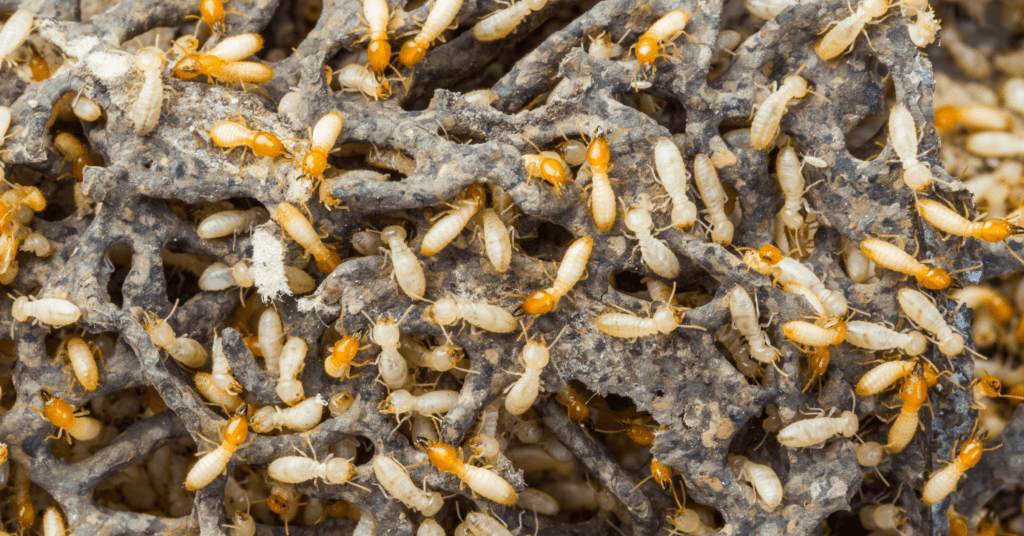
Carpenter ants operate a two-nest system. The parent colony usually lives outdoors in rotting stumps or dead logs. It can also nest in other decaying wood. Satellite nests are established inside homes. They form in wall voids and under insulation. They also form inside roof structures. Nests often appear around moisture-damaged window frames. Subterranean termites, the species most common in Canada, build their colonies underground and travel up to wood through mud tubes constructed along foundations and walls. Termite workers use these tubes to stay moist and protected as they move. They travel safely between the soil and their food sources. Over time, they create hidden termite galleries inside wood. These galleries slowly weaken key structural elements.
Colony Size and Lifespan
Termite colonies are both larger and longer-lived than carpenter ant colonies. A subterranean termite colony can grow to millions of members and the queen can live up to 30 years. Mature carpenter ant colonies in Vancouver typically number in the thousands. Vancouver’s mild winters mean carpenter ants may not fully go dormant. They stay active for longer periods. This gives colonies more time to grow throughout the year.
When You’ll See Them: Key Behavioral Differences
Carpenter ant swarmers typically appear between February and June in BC, often flying out of walls or windows in alarming numbers. Spotting swarmers inside your home is a sign that a mature colony has been established nearby, likely for two or more years already. Termite swarmers also emerge in spring, but the real damage is done by workers — silently, 24 hours a day, completely out of sight.
The Damage They Do Is Different, Too
Both pests can cause serious structural damage to wood-framed homes, but the signs they leave behind are distinct. Spotting the presence of termites early can greatly reduce repair costs. Catching carpenter ants when nests are still small also helps. Early action may prevent other issues in your home. It can avoid needing separate ant removal later. It can also help you avoid calling bed bug specialists.
How Termites Damage Wood: Signs of Termites to Watch For
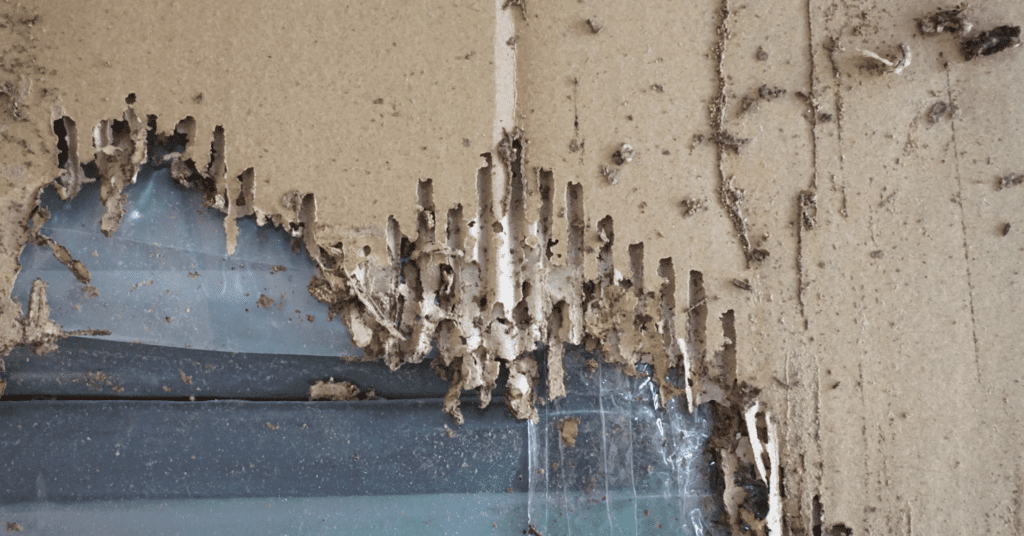
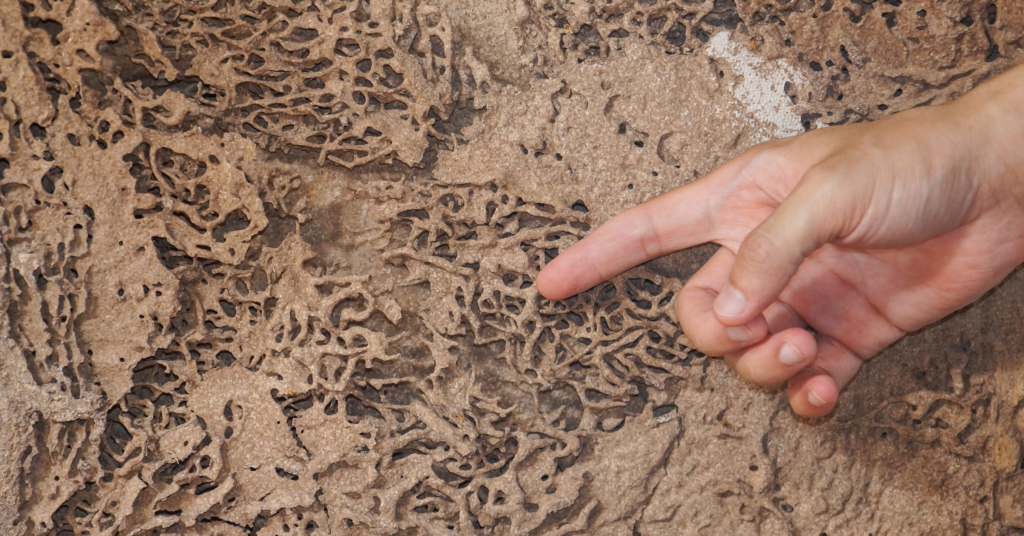
Because termites eat wood from the inside, their damage is often invisible until it becomes severe. They create irregular, rough-walled galleries filled with soil and moisture. From the outside, the wood can look completely normal while the interior has been hollowed out. Tapping a termite-damaged beam produces a hollow sound, and in advanced cases, floors may sag and doors or windows may suddenly stick for no apparent reason. Subterranean termites also leave behind pencil-thin mud tubes running along foundations and floor joists — one of their most recognizable calling cards. A well-established colony can cause substantial structural damage in as little as two to four years. In homes with persistent moist wood problems, termites can spread rapidly through hidden framing members, often starting from a primary termite nest deep in the soil. For a deeper look at early warning signs, inspection tips, and treatment options specific to subterranean species, our guide on how to detect and deal with termites explains what to watch for before damage becomes severe.
How Carpenter Ants Damage Wood Infestation Clues
Carpenter ant galleries are smooth, clean, and almost polished-looking. The ants push shredded wood fibres out of the nest as frass — fine, sawdust-like debris — near entry holes. This frass is often the first visible sign of an infestation. Carpenter ants strongly prefer moist or decaying wood to start their tunnelling, making Metro Vancouver homes especially vulnerable around window frames, rooflines, decks, and plumbing areas. If these clues suggest carpenter ants, it is important to learn what a carpenter ant nest looks like so you can help your technician pinpoint whether the main activity is in wall voids, roof structures, or moisture-damaged trim. Once a colony is well established, they expand into dry wood. They move into structurally sound beams and joists. Active worker ants travel back and forth in these areas. They transport food and tend the brood there.
Warning Signs Side by Side
| Warning Sign | Points To |
| Mud tubes on foundation or walls | Termites |
| Hollow-sounding wood | Termites |
| Frass (fine sawdust piles) near walls | Carpenter ants |
| Rustling sounds inside walls at night | Carpenter ants |
| Winged insects emerging indoors in spring | Either — look at wing shape |
| Shed wings near windowsills | Termites (wings detach easily) |
| Smooth, clean tunnels in wood | Carpenter ants |
| Irregular, soil-filled galleries in wood | Termites |
What Does This Mean in Terms of Treatment?
Termites and carpenter ants are very different insects. They have different biology and nesting behavior. They also need completely different treatment approaches. Professional help delivers far better results. DIY attempts are usually much less effective, especially when ant control or termite control must reach hidden colonies deep inside structures.
Why Store-Bought Products Fall Short
Off-the-shelf sprays and bait traps can kill the workers you see, but they rarely reach the core of the problem. For carpenter ants, the satellite nest inside your walls may be temporarily quieted while the parent colony outside continues replenishing workers. For termites, surface sprays have virtually no impact on a colony living several feet underground and sending workers up through concealed mud tubes. These gaps are why homeowners dealing with termite infestation or serious ant infestation are urged to contact professionals rather than relying on hardware store products.
How Professionals Treat Carpenter Ants
Professional carpenter ant treatment is a methodical, multi-step process:
1. Thorough Inspection
Technicians inspect the interior and exterior of the property. They look for frass deposits and entry points. They check for moisture damage and active ant trails. They also look for signs of satellite nest activity. Common entry points include door frames and window casings. They also check plumbing penetrations and crawl space vents, paying particular attention to wooden structures that show signs of rot or water damage.
2. Locating Nests
Professionals track activity back to its source, inspecting wall voids, attic spaces, crawl spaces, and perimeter vegetation. Some technicians arrive at dawn or dusk when carpenter ants are most active, following foraging trails to identify nesting locations. Locating ant nests accurately is critical to long-term success.
3. Targeted Treatment
Once nests are located, a combination of methods is applied:
- Non-repellent residual sprays allow ants to walk through treated areas and unknowingly carry the active ingredient back to the nest
- Insecticidal dust or foam injected directly into wall voids and enclosed spaces where nests are found
- Slow-acting bait systems placed along foraging routes, carried back to the colony by workers to eventually reach and eliminate the queen
4. Exterior Barrier Treatment
A protective barrier is placed around the foundation. It targets the routes carpenter ants use. These are the paths they follow from the outdoor parent colony into the structure.
5. Follow-Up and Monitoring
Because carpenter ants can have multiple satellite colonies, a single treatment is not always sufficient. Reputable companies schedule follow-up visits to confirm eradication and adjust the approach if needed.
6. Root-Cause Recommendations
Technicians look for moisture damage and leaky pipes. They also check for wood rot around the structure. Vegetation touching the house is another risk factor. They give clear advice to prevent re-infestation, such as repairing leaks that keep framing in a constantly moist wood state.
How Professionals Treat Termites
Termite treatment requires specialized equipment. Eradicating a subterranean termite infestation often requires liquid termiticide. The treatment is applied to soil around the foundation. Bait station systems are also placed in the ground. They are installed around the perimeter of the structure. Severe damage may require structural repairs. In those cases, professionals replace or reinforce affected wood. Any homeowner who suspects termite activity should contact a licensed professional immediately. Modern termite control programs typically use several methods together. They often include soil treatments around the home. In-ground baits are added to target hidden colonies. Ongoing inspections check for new termite activity. This includes drywood termites or dampwood termites, depending on your region. During follow-up inspections, technicians will also look for fresh termite droppings and new termite galleries to confirm whether the original termite nest has been fully eliminated.
Protect Your Home from Pests with Pestcheck
If you have seen large black ants inside your home, do not wait. Frass near your baseboards is another warning sign. Faint rustling sounds inside your walls are also a concern. Winged insects emerging in spring are a serious red flag. What looks like a minor nuisance today can become a serious structural problem soon. Hidden wooden structures may have been compromised for years. Multiple pests may attack the same area. Some can be even more destructive than termites in parts of your home.
Pestcheck is a family-owned pest control company that has been protecting homes and businesses across Metro Vancouver since 2018. We bring over 20 years of hands-on pest control experience to every job — and an unwavering commitment to doing it right.
What sets Pestcheck apart:
- QualityPro Certified — they are one of only 22 pest control companies in Canada with this accreditation, out of more than 1,281 providers nationwide. That represents roughly 1.7% of the entire industry.
- GreenPro Certified — all treatments follow environmentally responsible protocols using Health Canada–registered pesticides that are safe for families and pets
- 98% treatment success rate across more than 1,500 satisfied clients
- Integrated Pest Management (IPM) approach — addressing the root of the infestation, not just masking the symptoms
Pestcheck’s carpenter ant treatments follow the professional multi-step process outlined above: inspect, locate, treat, protect, and follow up. Our technicians are trained to find both parent and satellite colonies, apply targeted non-repellent treatments, and provide honest recommendations to address any underlying moisture or structural issues.
The Bottom Line
Termites and carpenter ants are two very different pests, but they share one thing in common: the longer they’re left alone, the worse the damage gets. Knowing what you’re dealing with is the first step, but getting rid of it for good is a job for a professional. Whether it’s mud tubes on your foundation or frass beside your baseboards, act fast. A timely inspection can save you thousands in future structural repairs. Understanding termites vs carpenter ants in your home is essential. It helps you choose the right expert and the right treatment plan. Smart choices made early can stop minor problems from becoming major failures.
If you are concerned about termites or carpenter ants damaging your home, now is the time to act. Our experienced West Vancouver pest control, North Vancouver pest control, and Vancouver pest control teams are ready to inspect, diagnose, and treat infestations before they get worse. We also provide reliable Burnaby & New West pest control, Coquitlam & Tri-Cities pest control, and Richmond pest control services to protect homes across the region, helping you stop structural damage early and keep your property safe.