

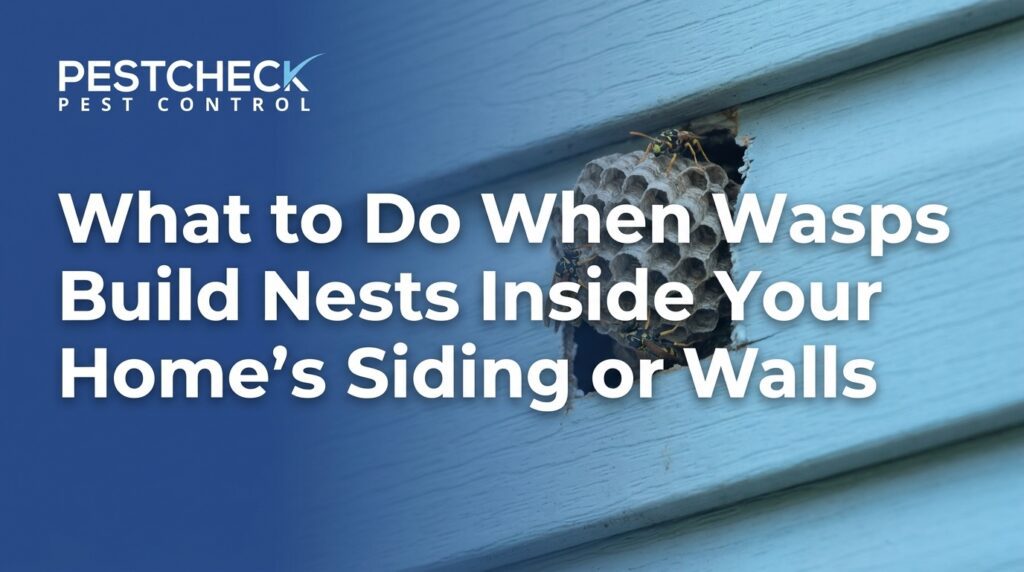
Discovering a steady stream of stinging insects disappearing into the exterior of your house is a stressful experience. Knowing exactly what to do when wasps build nests inside your home’s siding or walls is the first step to protecting your property and family. Unlike exposed nests hanging from a tree branch, these hidden colonies present unique structural and safety challenges that require immediate attention.
As a family-owned and operated pest management team with over twenty years of experience, we have successfully resolved countless hidden infestations for over 1,500 happy clients. We understand the anxiety that comes with a pest invasion, which is why we maintain a 98% treatment success rate and a 4.9 out of 5 service rating. In this guide, we will walk you through how to identify an internal infestation, the risks of leaving it untreated, and the safest path to complete eradication.
Signs You Have a Wasp Nest Hidden in Your Siding or Walls
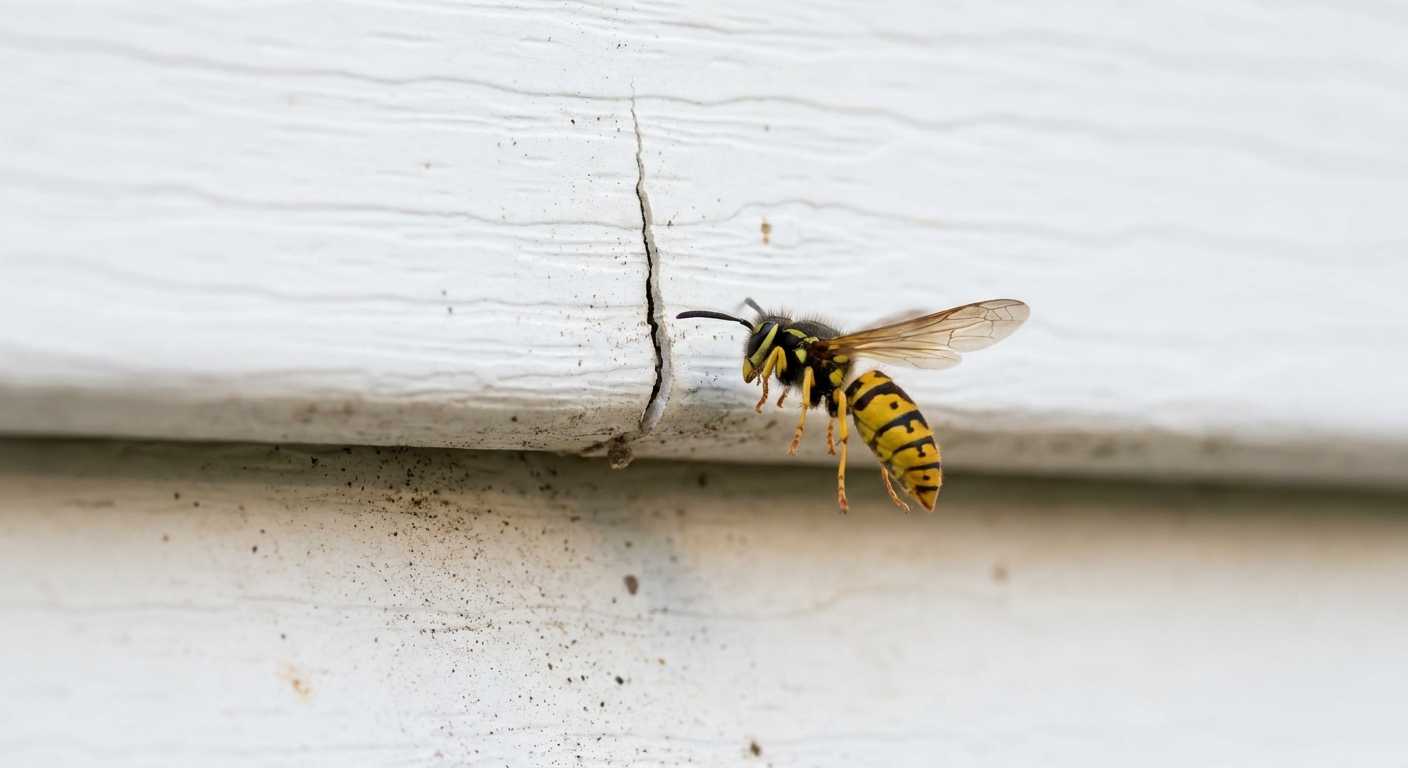
Observing Heavy Wasp Traffic at Specific Entry Points
One of the most obvious indicators of a hidden colony is a high volume of insect traffic concentrated around a single point on your home’s exterior [4]. You might notice wasps flying in and out of a gap in the siding, a weep hole in the brickwork, or a crack near the eaves. This activity often resembles airline traffic, with the insects forming a direct, steady flight path as they leave to forage and return to feed their young [4]. If you observe this organized movement, there is a high probability that a nest is actively growing behind your walls.
Listening for Buzzing or Chewing Sounds Inside
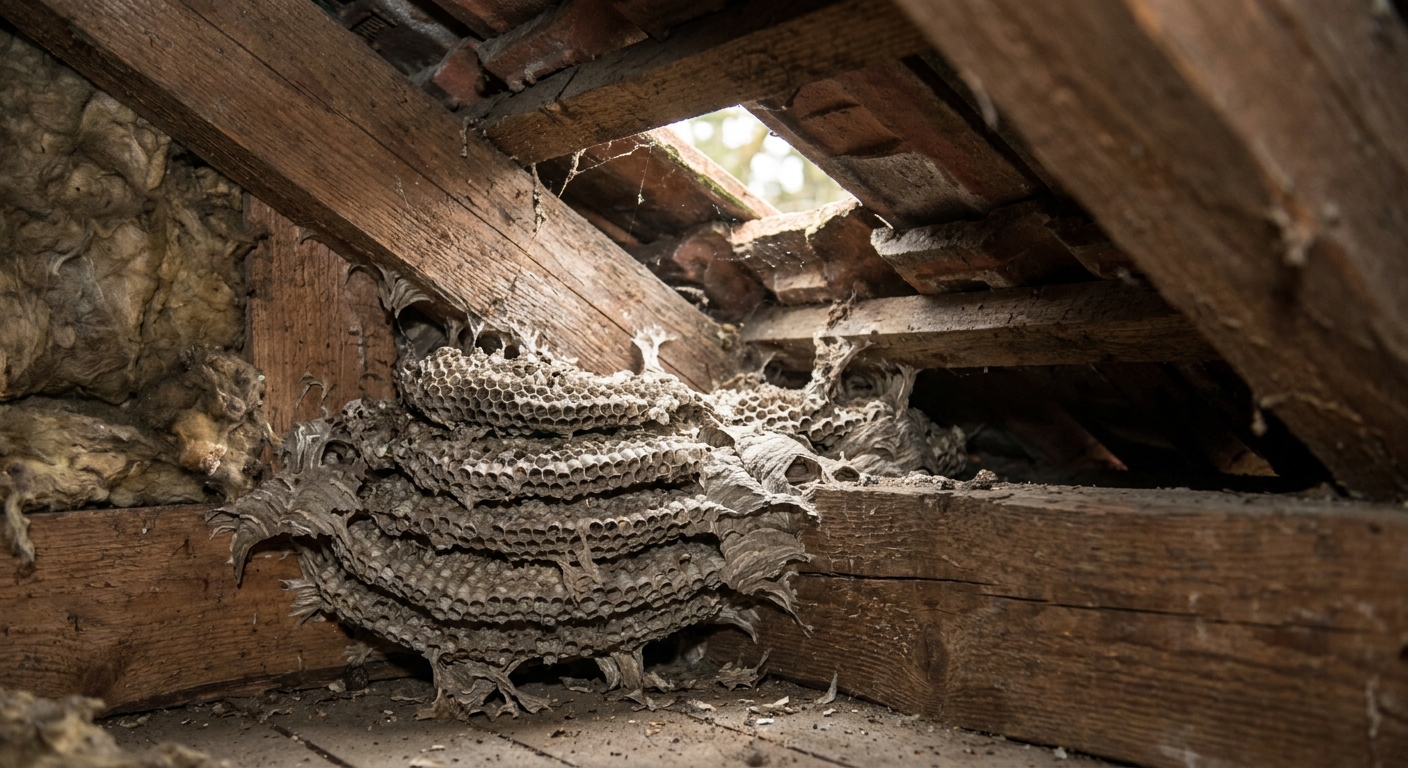
Because the colony is concealed within a wall void, visual confirmation is not always possible from the inside. However, auditory clues can be a strong warning sign. If you place your ear near the drywall where the exterior traffic is concentrated, you may hear a distinct, low-level buzzing or humming sound. As the colony expands, you might also hear a crackling or tapping noise. This sound is caused by the insects actively chewing on the paper backing of your drywall or the wooden structural framing to make more room for their growing nest [3].
Common Wasps That Nest in Wall Voids
Yellow Jackets: The Most Aggressive Wall Nesters
When dealing with structural voids, the most common and problematic culprits are yellow jackets [4]. These highly aggressive social insects are biologically driven to seek out protected, enclosed spaces to build their colonies. Unlike fuzzy bees that feed on nectar, yellow jackets are predatory hunters with sleek bodies [4]. A single yellow jacket colony hidden in a wall can quickly grow to contain thousands of defensive workers by late summer [1], making them a significant hazard to anyone nearby.
Other Social Wasps Drawn to Structural Cavities
While yellow jackets are the most frequent wall nesters, other social species may also exploit structural cavities. Certain hornets, which are the largest of the social species, build large nests enclosed in a paper-like envelope and will occasionally utilize deep structural voids [2]. Paper wasps, known for their open-comb umbrella-shaped nests, generally prefer exposed eaves but can sometimes establish smaller colonies just inside loose siding or attic vents [1, 2]. Regardless of the exact species, all social colonies will aggressively defend their home if they feel threatened.
Why Wasps Are Attracted to Your Home’s Exterior
Seeking Protected Shelter for Overwintering Queens
The life cycle of a social colony begins and ends with the queen. In the fall, newly mated queens seek out warm, protected environments to overwinter and survive the freezing temperatures [1, 3]. The cozy, insulated gaps behind your siding or within your attic provide the perfect sanctuary. When spring arrives, these overwintering queens emerge from their dormant state and often decide that the very structure that kept them safe all winter is the ideal location to begin constructing a new nest [1, 3].
Exploiting Existing Structural Vulnerabilities and Gaps
Wasps do not typically chew their own initial entry holes through solid exterior materials; instead, they exploit existing structural flaws. Unsealed utility penetrations, damaged exhaust vents, warped vinyl siding, and deteriorated caulking around window frames offer easy access to the hollow voids behind your walls. Once a single queen discovers a suitable gap, she will slip inside and begin the maceration process, chewing up wood fibers to create the paper-like material used to build her hidden empire [2].
The Dangers of Ignoring an Internal Wasp Infestation
The Risk of Wasps Chewing Through Interior Drywall
Ignoring a hidden colony is incredibly dangerous due to the insects’ need for continuous expansion. As the population explodes during the summer months, the original wall void may become too small. To create more space, the workers will chew through insulation, wood, and eventually the interior drywall [3]. If left untreated, they can completely breach the wallboard or ceiling, resulting in an unexpected and terrifying swarm of aggressive insects pouring directly into your living room or bedroom [3].
Attracting Secondary Scavenger Pests to the Nesting Site
An active or recently abandoned nest is a massive source of protein and organic matter. The dead larvae, discarded prey, and organic nest materials left behind in your walls act as a magnet for secondary scavenger pests [3]. Beetles, ants, and even rodents are highly attracted to the decaying matter. Failing to properly address the primary infestation often leads to a cascading pest problem that requires extensive remediation to resolve.
Why You Should Never Plug the Exterior Entrance Hole
The Danger of Forcing Wasps Indoors
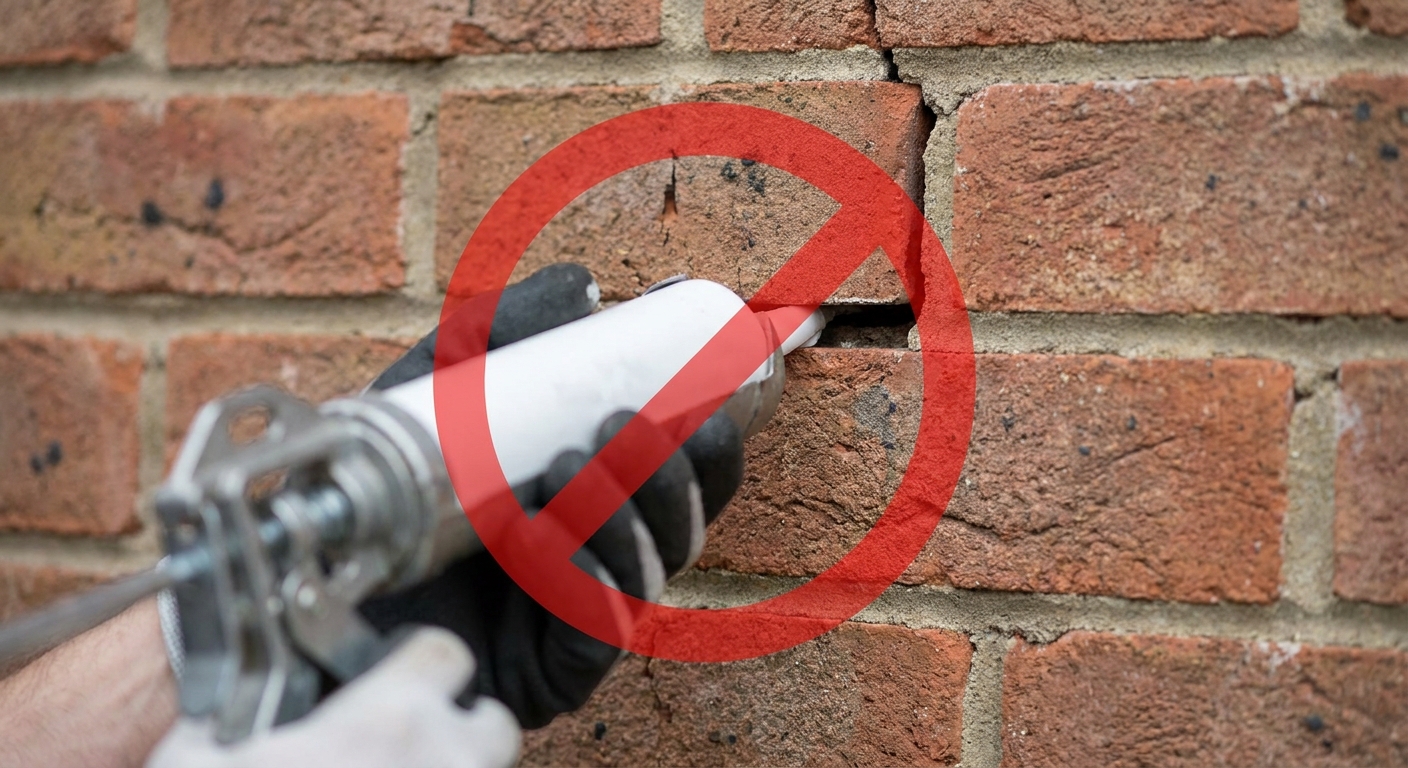
One of the most common and disastrous mistakes a homeowner can make is attempting to seal the exterior entry point while the nest is still active [3]. It is a critical safety rule that you must never plug the hole with caulk, foam, or mesh in an attempt to trap them. If the exterior exit is blocked, the insects will not simply suffocate and die. Instead, they will go into a frenzy and immediately begin chewing their way out to find a new escape route [3].
How Blocked Exits Lead to Dangerous Indoor Swarms
Because the exterior materials like brick or siding are much harder than the interior drywall, the trapped insects will instinctively chew inward [3]. This forces the entire angry colony to break through your interior walls. What was once an exterior nuisance is instantly transformed into a severe indoor emergency, putting your family and pets at immediate risk of multiple stings and allergic reactions.
Why Professional Wasp Removal is the Only Safe Option for Wall Voids
The Necessity of Specialized Extraction Equipment
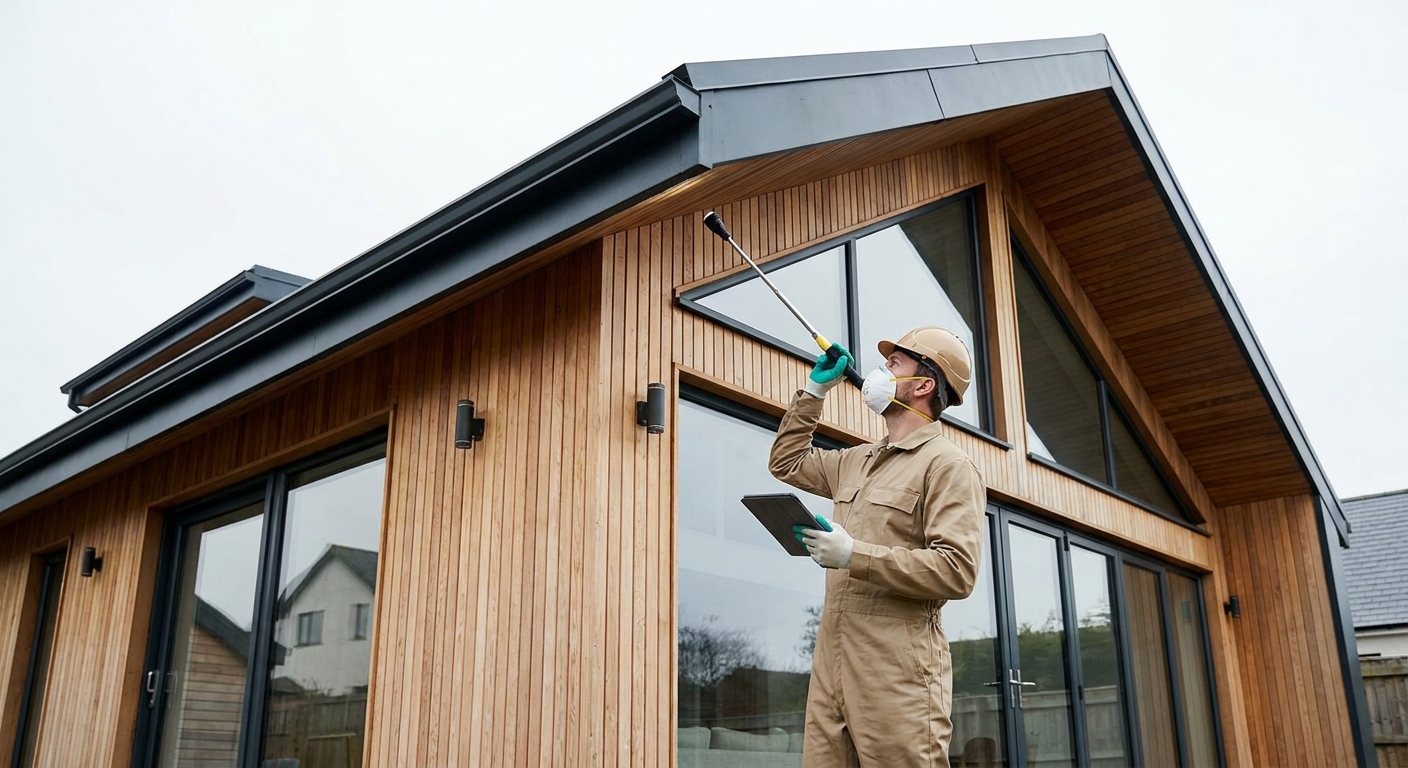
Extracting a stinging colony from a wall void requires specialized training, government-registered treatments, and professional-grade personal protective equipment (PPE) [4]. As a QualityPro Certified company, our technicians utilize specialized dust applicators that penetrate deep into the wall void to neutralize the colony safely [4]. Led by Stephen Scott, our owner and head technician with field experience dating back to 2000, our team knows exactly how to map the hidden structure of a nest without putting your family in harm’s way.
Ensuring Complete and Safe Colony Eradication
We take pride in our rigorous four-step process: a comprehensive inspection, an accurate diagnosis, targeted treatment, and thorough follow-up. We do not just say trust us—our technicians will walk you through exactly how our procedures work. To ensure your peace of mind, we send an email twenty-four hours prior to your appointment and guarantee our technicians will arrive within thirty minutes of the designated time. Our team always wears disposable booties to keep your home clean, and we ensure all dead pests are safely removed under local environmental guidelines. We promise to keep working with you until you are completely satisfied with the results.
How to Prevent Future Wasp Nests in Your Siding
Conducting Thorough Inspections of Eaves and Siding
The most effective long-term strategy for keeping stinging insects out of your walls is proactive exclusion [4]. This begins with a meticulous inspection of your property’s exterior. Homeowners should regularly check the eaves, fascia boards, brick weep holes, and the overlapping seams of siding for any signs of damage or unusual gaps. Identifying these structural vulnerabilities early is the key to stopping a fertile queen from moving in.
Sealing Exterior Cracks and Gaps Before Spring
Timing is everything when it comes to prevention. All exterior cracks, crevices, and unsealed utility lines should be properly caulked and sealed during the late winter or very early spring, long before the overwintering queens emerge to look for a new home [1]. Installing tight-fitting mesh screens over attic vents and repairing any warped siding will create a robust physical barrier, significantly reducing the chances of a future infestation.
Conclusion: Protect Your Home from Hidden Wasp Colonies
Understanding what to do when wasps build nests inside your home’s siding or walls can save you from severe structural damage and dangerous indoor swarms. From recognizing the early warning signs of heavy flight traffic to understanding why you must never seal the exterior hole, proper identification and safety protocols are essential. Because these hidden colonies pose such a high risk, relying on a fully licensed and insured professional is the only guaranteed way to eradicate the threat. Our family-owned team is dedicated to providing safe, effective, and communicative pest management to restore the safety and comfort of your home.