
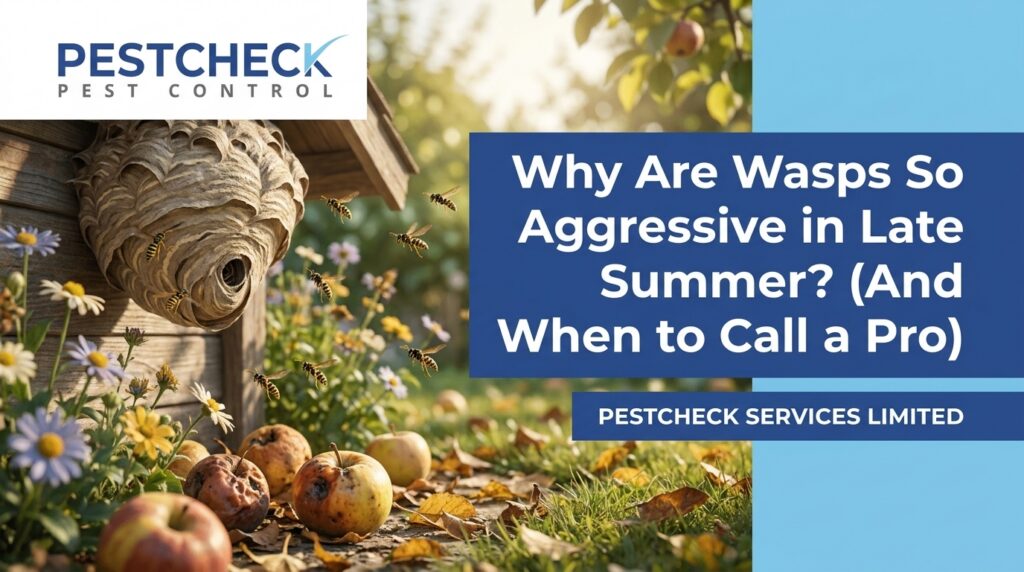
As the days grow shorter and the warm season begins to wind down, you might notice a sudden, unwelcome shift in the behaviour of stinging insects around your property. If you find yourself wondering Why Are Wasps So Aggressive in Late Summer? (And When to Call a Pro), you are not alone. The reality is that this sudden surge in hostility is not random; it is a direct result of the colony reaching its maximum capacity just as their natural food sources rapidly deplete. We see this exact scenario play out every year, turning peaceful backyards into stressful environments.
The Late Summer Wasp Surge: Why the Sudden Increase in Activity?
Throughout the spring and early summer, queens are busy building their nests and breeding. Because they are focused on expansion, they generally leave humans alone. However, by the time the season begins to shift, these nests have reached their absolute peak size. A single nest can hold thousands of workers, all competing for dwindling resources.
Yellowjackets vs. Hornets: Identifying the Most Aggressive Stingers
Not all stinging insects behave the same way. Yellowjackets are notorious scavengers that often nest in ground holes or wall voids. They are highly territorial and responsible for the majority of aggressive encounters. Hornets, while larger and capable of delivering painful stings, typically build aerial nests and tend to be less interested in your food, attacking primarily when their nest is directly threatened. Because every property is unique, our process always begins with a comprehensive inspection by one of our licensed technicians to correctly identify the species and customize your service.
The ‘Furloughed’ Wasp: How the Colony Lifecycle Drives Aggression
To truly understand their hostility, you have to look at their biological lifecycle. For most of the year, worker wasps are busy hunting protein-rich insects to feed the colony’s developing larvae. In exchange for this constant food supply, the larvae secrete a sugary liquid that serves as the primary source of nutrition for the adult workers.
As the season ends, the queen stops laying regular eggs and focuses on producing reproductives for the following year. The existing larvae mature, and the vital sugary food source dries up entirely. Stephen Scott, our owner and head technician who has been working in pest control since 2000, often explains this biological shift to clients as the workers being “furloughed.” Suddenly, thousands of adult workers are out of a job and starving, driving them out of the nest in a frantic search for carbohydrates to survive.
Drunk and Desperate: Why Wasps Crash Your End-of-Summer Picnics
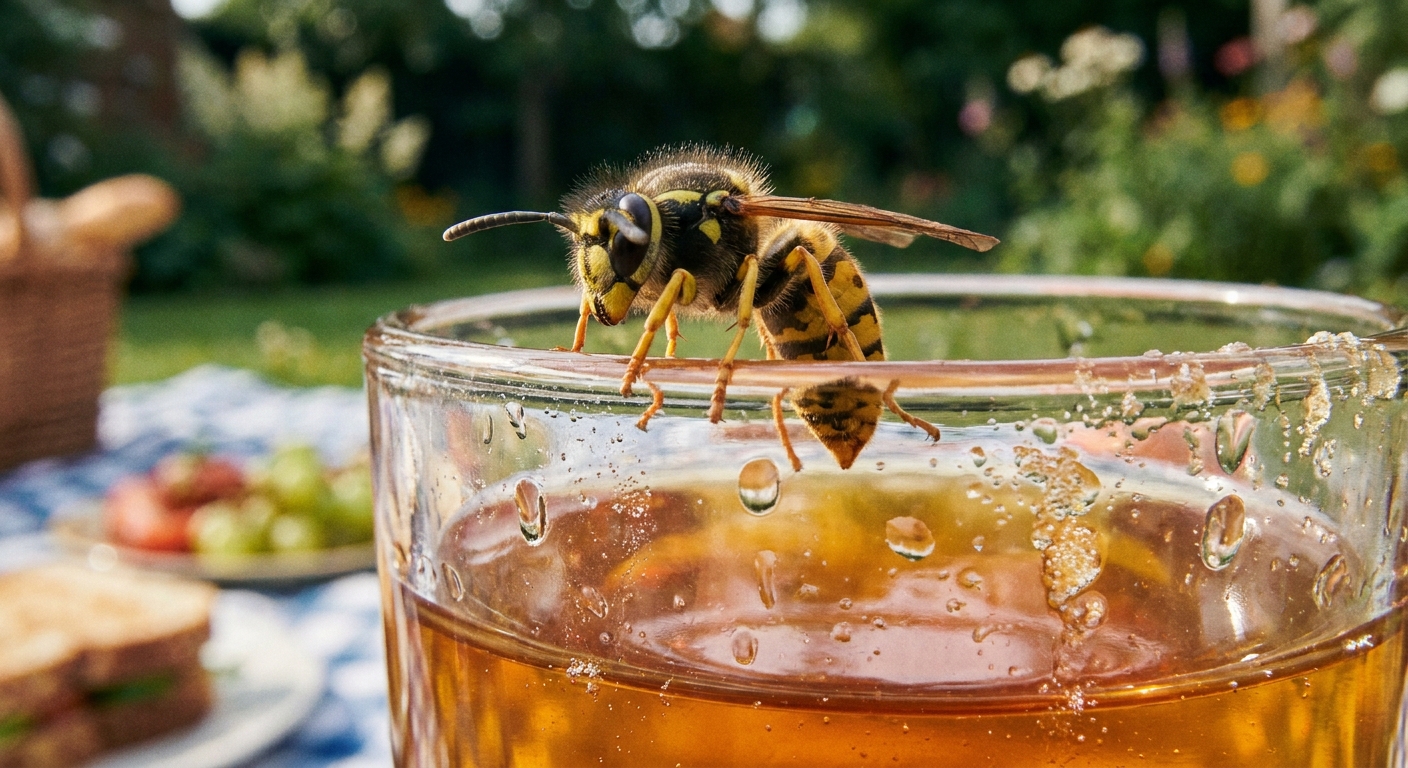
Without the sugary secretions from their young, these starving insects turn their attention to whatever sweets they can find. This is why they relentlessly swarm around sugary drinks, barbecue sauces, and leftover foods at your outdoor gatherings. Furthermore, natural fruits begin to fall from trees and rot on the ground during this time of year.
As these fallen fruits ferment, they produce alcohol. Foraging workers consume this fermenting fruit and can actually become intoxicated. An intoxicated, starving insect is significantly bolder, highly unpredictable, and much more likely to sting unprovoked.
The Swarm Effect: Understanding Wasp Alarm Pheromones
When a stinging insect gets too close, your first instinct might be to swat it away or crush it. However, doing so can trigger a dangerous chain reaction. When injured or killed, these insects release an alarm pheromone—a potent chemical signal that alerts other nearby members of the colony that they are under attack.
This pheromone acts as a beacon, drawing a defensive swarm ready to strike. Because they do not lose their stingers like honeybees, a single yellowjacket can inflict numerous painful stings. With our 98% treatment success rate and decades of experience, our team strongly advises remaining calm and slowly walking away rather than swatting at them to avoid triggering this swarm effect.
Effective Ways to Keep Wasps Away from Your Yard
While you cannot change their biological lifecycle, you can implement effective prevention strategies to make your outdoor spaces less inviting to these desperate foragers.
Proper Sanitation and Securing Trash
The most crucial step is removing their access to food. Keep all outdoor garbage bins tightly sealed and ensure that recycling containers are thoroughly rinsed out. When dining outside, keep sweet drinks and protein-rich foods covered in airtight containers until you are ready to eat, and clean up any spills immediately. Tossing your trash in a tightly sealed bag will give them fewer reasons to hang around.
Using Fans to Disrupt Flight Paths
A highly effective, non-chemical deterrent for outdoor gatherings is the use of portable fans. These insects are relatively weak flyers, and the artificial breeze from a fan makes it incredibly difficult for them to navigate around your seating area. Additionally, the moving air disperses the appealing scents of your food, making it harder for them to locate the source in the first place.

When to Call a Professional Wasp Control Expert
Preventative measures work well for wandering foragers, but if you have an active nest on your property, professional intervention is necessary. Our family-owned and operated business has been protecting homes for over 20 years, bringing a wealth of expertise and a commitment to keeping you completely satisfied.
The Dangers of Hidden Nests
One of the most hazardous situations involves nests hidden inside wall voids or structural gaps. A common mistake is attempting to block or caulk the entrance hole. If trapped, they will simply chew through your drywall and emerge by the hundreds inside your living space. Our technicians are trained to properly diagnose these hidden threats and apply targeted treatments that eliminate the colony at the source without pushing them indoors. We provide progress reports throughout the service so you are never left in the dark.
Protecting Your Family from Severe Swarms and Allergic Reactions
Stings are not just painful; they can cause severe allergic reactions and anaphylaxis. When dealing with a large, agitated colony, it is vital to rely on fully equipped professionals. We utilize personal protective equipment, including disposable booties to respect your home’s cleanliness, and exclusively use federally registered, tested pesticides. With over 1,500 happy clients and a 4.9 out of 5 service rating, we guarantee a safe, effective eradication. If you are wondering Why Are Wasps So Aggressive in Late Summer? (And When to Call a Pro), the answer is simple: when their desperation puts your family at risk, it is time to let our certified team step in.